
It is Saturday morning. There is no school, none of the usual weekday rush and, in theory at least, there is time. Somewhere between the first coffee of the day and the question, “What should we do today?”, the child has already found a screen. It might be a tablet, a phone, the television or a game that was supposed to last for a few minutes and somehow stretched much longer. There is nothing particularly unusual about this scene. Screens are everywhere in modern family life and, for a parent trying to organise the house, the day and perhaps a few hours of rest at the same time, they are often the easiest option. The interesting question is not whether screens are “good” or “bad”. It is something far more practical: what other choices does a child actually have when they want something to do?
Because sometimes we say that children get bored too easily or that they do not want to move away from a screen, when perhaps they simply have not discovered anything interesting enough to pull them away from it yet. A child is not born knowing that they enjoy climbing, swimming, dancing, martial arts, cycling or walking through nature. Someone has to give them the opportunity to try these things first. And not every new experience needs to become a hobby, a weekly schedule or another commitment squeezed into an already busy family calendar. Sometimes it can simply be what it is: a different Sunday, an afternoon outside, something that made the whole family laugh or the first time a child discovered something they genuinely enjoyed.
The screen is the easy option. That does not make it the enemy.
It is easy to turn the conversation about children and screens into a battle between what is “right” and what is “wrong”. Real family life is much less clear-cut. Children are growing up in a digital world. They use technology at school, communicate through it, play with it and learn through it. Their parents, of course, do much the same. Expecting a child to treat screens as something completely separate from everyday life is therefore not particularly realistic. What we can do is make sure there are other choices available that are genuinely interesting too.
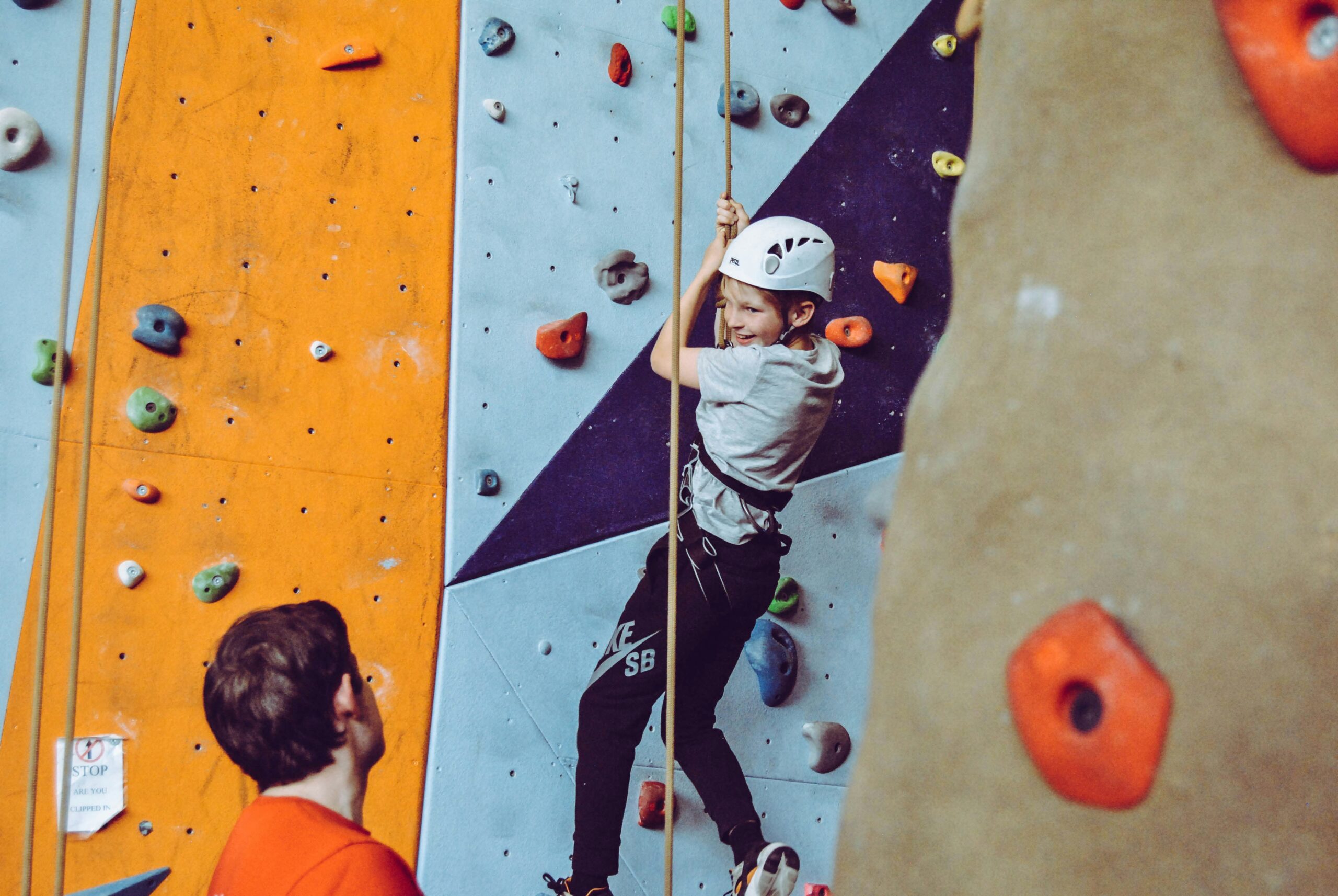
There is a big difference between saying, “Put the tablet down and go do something,” and asking, “Do you want to go and try something we have never done before?” In the first case, we remove something without necessarily offering an alternative. In the second, we create curiosity. And curiosity can be much more powerful than another restriction. It could be a bike ride, an activity by the sea, a dance class, a first climbing experience or simply exploring somewhere the family has never been before. It does not always have to be spectacular. Small adventures can make an ordinary day feel different precisely because they interrupt the familiar rhythm for a while.
Children do not always know what they enjoy until they try it
As adults, we already have a fairly large collection of experiences that helps us understand what we enjoy. We know whether we prefer the mountains or the sea, whether we like running, dancing, exercising alone or doing something as part of a group. Children are still building that collection. A child who says, “I don’t like hiking” may never have walked along a trail that actually felt exciting to them. Another may believe that sport is not for them because they never connected with football or basketball, without ever having tried climbing, swimming, martial arts or something completely different.
That is why there is value in allowing children to try something new without needing to be good at it already. The first time they attempt an activity might feel awkward. They might be nervous, become tired sooner than expected or decide after an hour that they never want to do it again. That is useful information too. Discovery is not only about finding the things we love. It is also about learning what does not suit us.
But somewhere among all those attempts, something else can happen. A child who was hesitant a few minutes earlier manages to climb a little higher on a climbing wall. Another gets into a kayak for the first time and suddenly does not want to get out of the water. A child who finds it difficult to stay focused at home might spend an hour trying the same new movement again and again. We cannot know in advance which experience will create that moment of connection. We can only create more opportunities for it to happen.
Not every activity needs to become “their sport”
There is a small trap in the way we sometimes organise children’s activities. As soon as they enjoy something, the next questions can arrive almost automatically. How many times a week does it take place? How much is the membership? What equipment do they need? Are there competitions? Do they need to start now if they want to become good at it? Without really noticing, an enjoyable experience can quickly acquire a schedule, targets and obligations.
Of course, when a child genuinely falls in love with a sport or activity, doing it regularly can become an important part of their life. But that does not need to be the destination of everything they try. A child can go climbing once and have an incredible time without becoming a climber. They can go hiking with their family without everyone immediately buying equipment for the next ten hikes. They can try dance, kayaking or a new sport and simply keep the experience.
When we remove the expectation that children should be good at everything they try, we leave more room for exploration. That matters because childhood is one of the few periods in life when you can do something for the first time without needing a particularly good reason for doing it. You can simply want to know what it feels like.
Some of the best family moments begin without a big plan
Ask a family which moments they remember most clearly from the last few years and they may not mention the most expensive or carefully organised ones. Often, it is something much smaller. The day everyone got far wetter than expected. The first time a child managed to do something on their own. The wrong turn on a trail that eventually became the story repeated at every family gathering. The ice cream after an activity. The journey home when everyone was exhausted but nobody could stop talking about what had happened.
Shared activities have something particular about them: they give a family something to experience together rather than simply placing everyone in the same space. That does not mean every weekend needs to become a family expedition. There are weekends when the sofa is an excellent choice. But when there is room for something different, an activity can create space for conversation, laughter, small challenges and those moments that are almost impossible to plan in advance.
That is also something a photograph or video can never fully replace. We can capture a moment, but the memory usually lives in everything that happened around it: how we got there, who was nervous first, who wanted to try again and what everyone talked about on the way home.
The weekend does not need to be organised like a project
There is, of course, the parent’s side of the story. “We should do more things with the kids” sounds wonderful until it is added to a week that already contains school, work, shopping, driving, appointments and a calendar that feels full before the weekend has even started. If every different activity requires hours of searching, phone calls and organising, the easier option of staying home becomes completely understandable.
Perhaps the goal, then, is not to fill a family’s schedule even further, but to make the choices easier. To be able to see what exists nearby, what might suit a child’s age and interests and what the family could realistically do this weekend. Sometimes the difference between saying, “It would be nice to do something,” and actually leaving the house is simply how easily we can find that idea.
And not every outing needs an educational purpose or has to become the best family experience of the year. It can last two hours. Something might not go as expected. A child may complain at the beginning and have a brilliant time afterwards, or exactly the opposite. That is what family life actually looks like, and perhaps experiences become more valuable when we stop trying to make every one of them perfect.
More choices mean more chances to find something of their own
Not every child needs to love nature. Not every child needs to love sport, dance or adventure either. Two children in the same family can try exactly the same activity and come home with completely different opinions. The goal is not for us to decide what the “right” interest should be. It is to create enough room for children to discover for themselves what makes them want to go back.
That is also one of the things InAction aims to make simpler: helping people and families discover activities and experiences around them, from fitness and wellness to outdoor experiences, without needing to know exactly what they are looking for before they begin. For a family, that can mean replacing yet another search for “what can we do today?” with a wider range of real possibilities.
Ultimately, the goal is not to fill every free hour in a child’s life. Nor is it to turn every weekend into a schedule of activities. Children need time to be bored, to play, to rest and, yes, to use their screens too. But they also need opportunities to discover a world they cannot fully experience simply by looking at it.
They might try ten different things and leave nine of them behind. The tenth might become the thing they look forward to all week.
And there is only one way to find that out: by trying it.
Less Scroll. More Life.