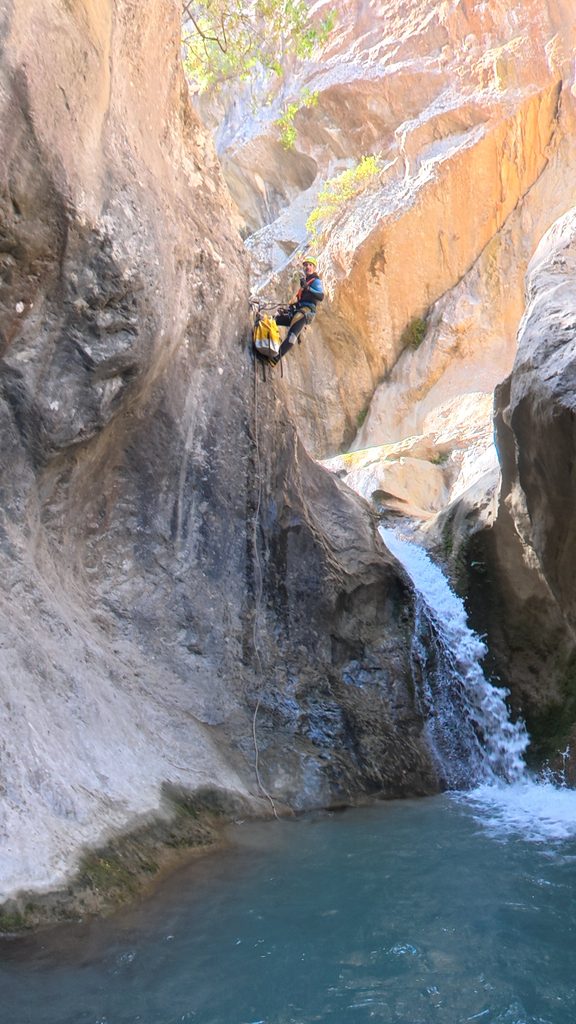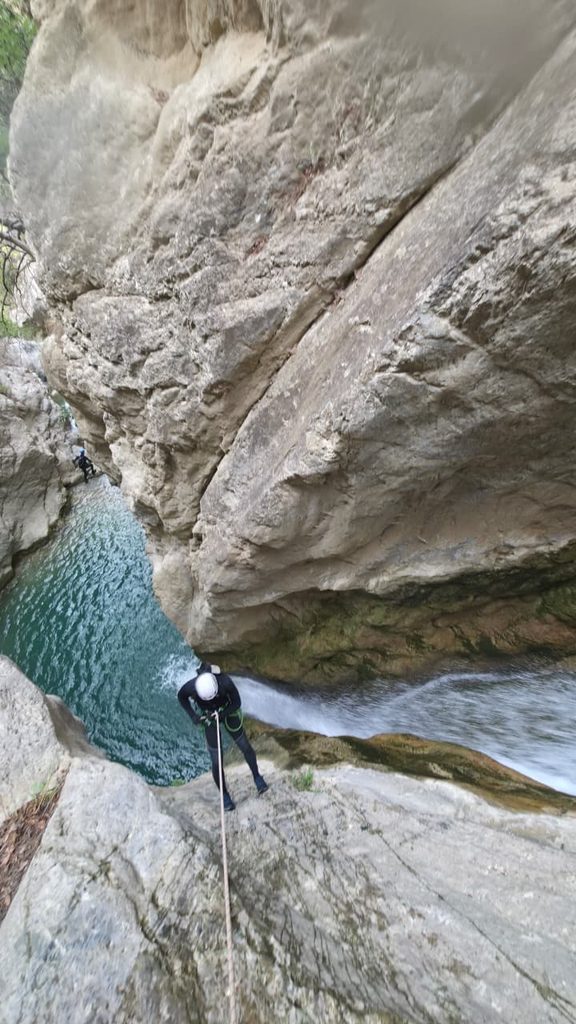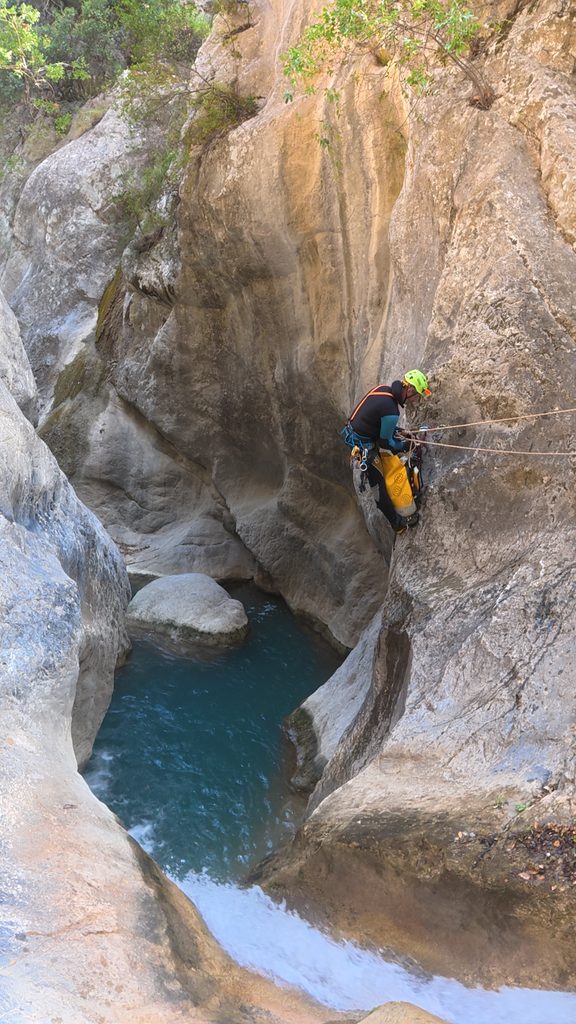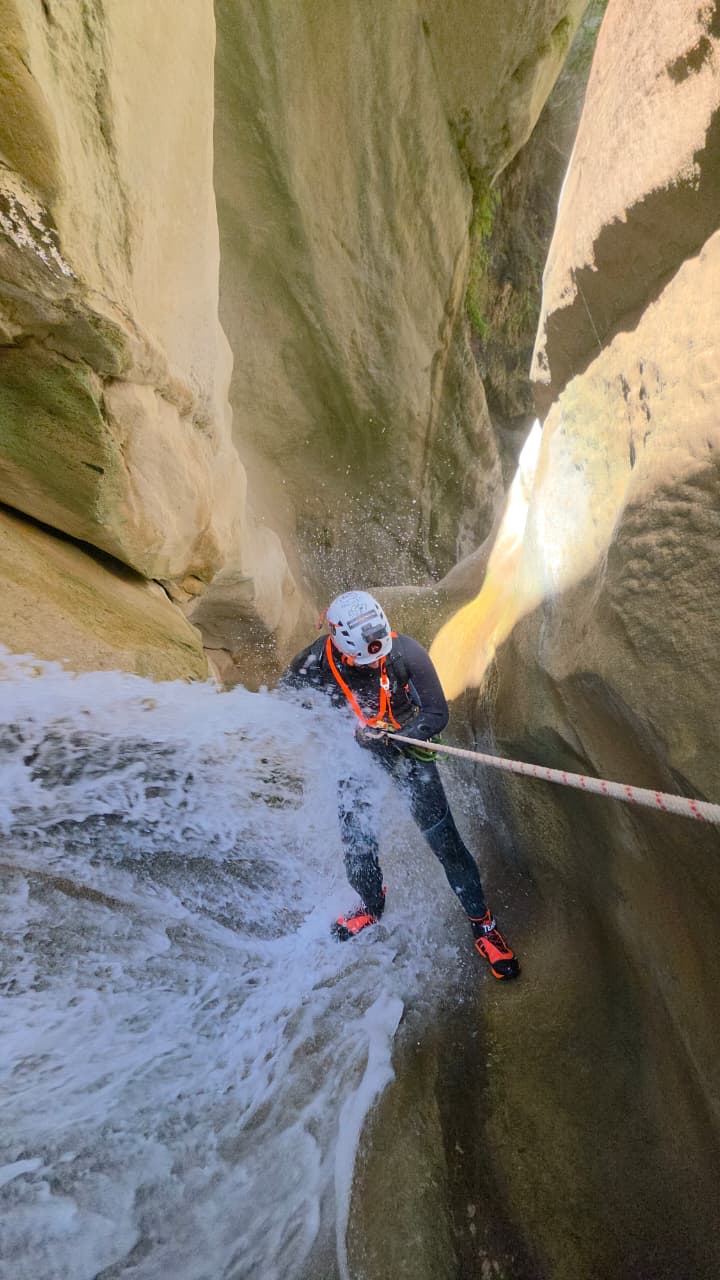

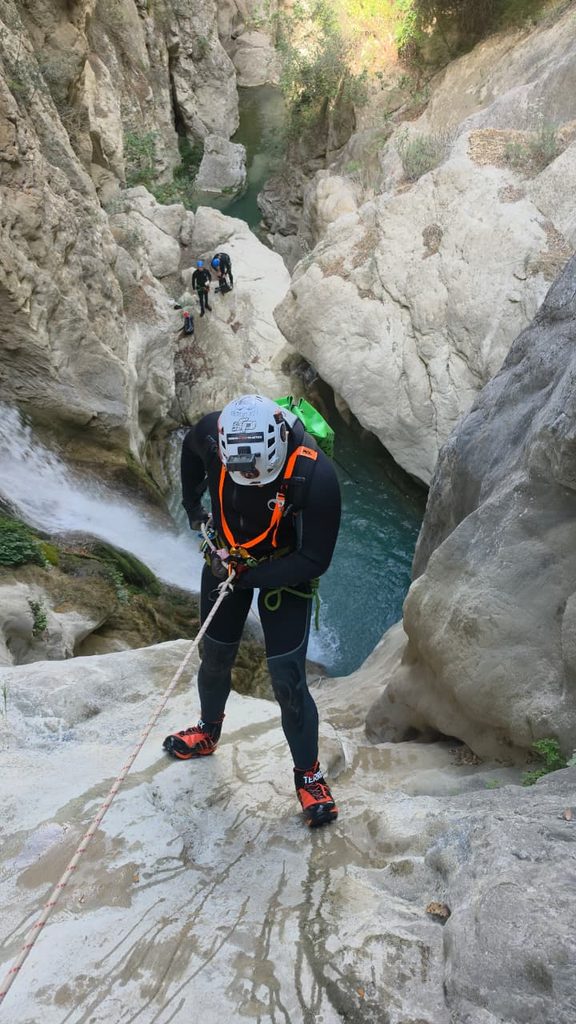
There is an image that often comes with someone’s first encounter with canyoning: a narrow gorge, water running between rock walls, helmets, ropes and someone descending beside a waterfall. If you have never tried anything similar, the first thought is fairly predictable: “That looks incredible, but it is probably not for me.” From a photograph or a short video, canyoning can easily look like an activity reserved for highly experienced people or those searching for something extreme. The reality is more nuanced. Gorges and routes can vary enormously in difficulty, and an organised experience designed for beginners is very different from a demanding technical descent.
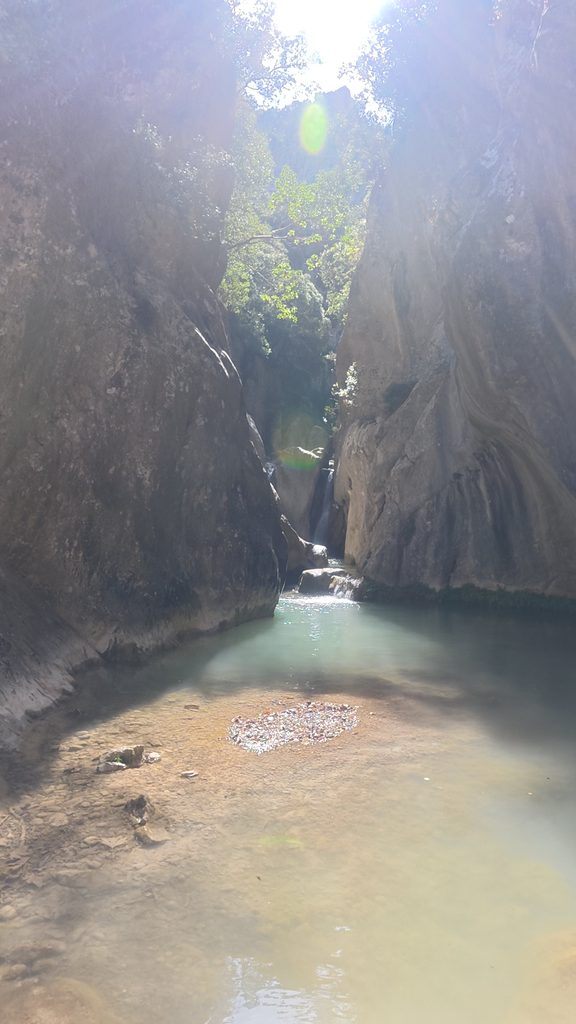
That is perhaps one of the most interesting things about canyoning. It is not simply a sport that happens to take place outdoors. The landscape itself becomes part of the activity. You move through places where water has shaped the rock over time, between narrow passages, natural pools and waterfalls, often reaching sections of a landscape that cannot be approached from an ordinary trail. In Greece, where mountainous terrain is often much closer than we realise, canyoning offers a very different way to experience this side of the country. Before deciding whether you want to try it, however, it is worth understanding what canyoning actually involves — and, just as importantly, what you should never take for granted.
What exactly is canyoning?
Canyoning is an outdoor activity that involves travelling through a gorge using a combination of different forms of movement. Depending on the particular route, this can include walking, moving through water, swimming and technical rope descents where required. Some gorges may also include natural slides or places where jumps are possible, but these are not features of every route and should never be assumed to be part of the experience. Conditions and the way a gorge is travelled can vary significantly from one location to another.
That is exactly why canyoning is difficult to describe with a single image. One experience might be relatively short and designed to introduce a beginner to the activity, while another may require many hours, good physical condition and considerable technical experience. Even the presence of water can completely change the character of a route. The same environment may present different conditions depending on the season, recent rainfall and water levels.
For someone trying canyoning for the first time, the most important thing is not to understand every technical detail. It is to realise that canyoning is much more than “descending a waterfall on a rope”. It is an entire journey through a natural environment that requires you to adapt to what is in front of you. Perhaps that is also what makes it feel so different from many other outdoor activities in Greece: for a few hours, you are not simply looking at the landscape. You are moving through it.
Do you need experience to try canyoning?
The short answer is that it depends on the gorge and the experience you choose. There are organised activities designed for people with no previous canyoning experience, just as there are technical routes that have no place in a beginner’s first attempt. That is why “Can I go canyoning?” is often a less useful question than “Is this particular route suitable for my level?”
This matters because we often judge an outdoor activity by its most spectacular version. We see a large descent, a narrow gorge or a powerful waterfall and assume that the entire activity requires the same level of experience. It does not. Just as your first hike does not need to involve a demanding mountain summit, your introduction to canyoning can take place on a route specifically selected for people who are starting out.
You do not have to be an athlete to enjoy an outdoor activity either. You do, however, need to be honest about your physical condition, how comfortable you are around water, any fears you may have and anything else that could affect the experience. A responsible organiser or professional should be able to explain the duration, physical demands, participation requirements and difficulty of the particular route before you book. “Beginner-friendly” should not simply be a label. It should genuinely reflect what you are going to encounter.
How difficult is canyoning really?
If there is one answer worth remembering, it is that there is no single difficulty level for canyoning. Two experiences carrying exactly the same activity name can be completely different. The length of the route, elevation changes, the approach and exit, the presence and flow of water, technical sections and weather conditions can all significantly change what is required.
There is also a kind of physical fatigue that photographs do not always communicate. Moving for several hours across wet and uneven terrain feels very different from spending the same amount of time walking along a road or an easy trail. You need to pay attention to where you place your feet, maintain your balance and be comfortable continuing even after you are completely wet. For many people, that is part of what makes the experience enjoyable. For others, it may be one of the reasons a particular route is not the right choice.
Then there is the psychological side. You can be in excellent physical condition and still feel very different when you stand at the top of a descent for the first time. That does not mean canyoning is “not for you”. Height, moving water and the feeling of being inside a narrow natural environment can affect people differently. A well-organised first experience should take this into account rather than considering only whether someone is physically capable of walking for three or four hours.
What equipment do you need for canyoning?
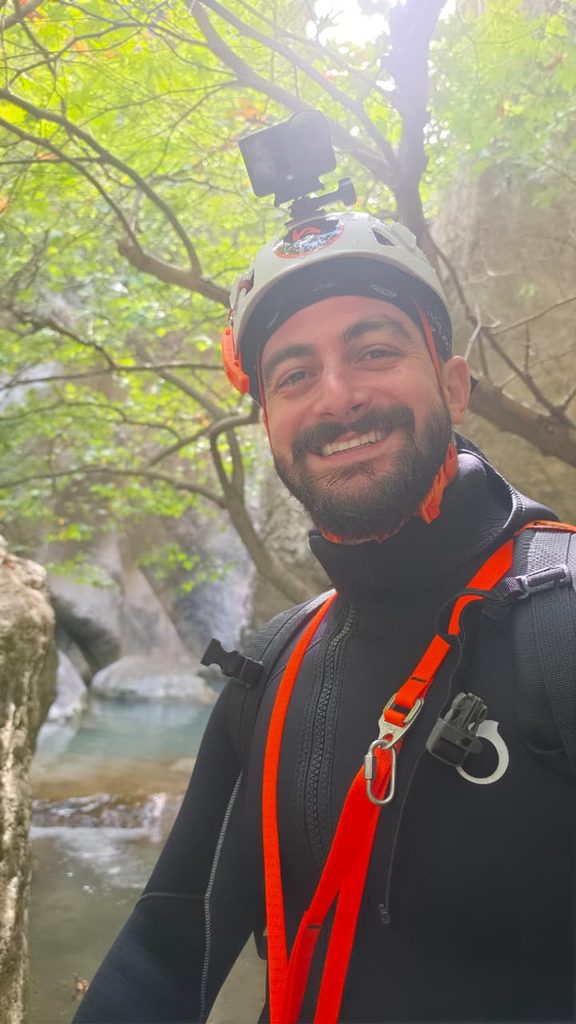
Equipment varies according to the route and conditions, but technical canyoning can involve a helmet, a suitable harness and the necessary equipment used for rope descents, while wetsuits are commonly used in aquatic environments where conditions require them. Appropriate footwear also matters because movement can take place across wet and slippery surfaces. On an organised experience, the organiser should clearly explain which technical equipment is provided and what participants are expected to bring themselves.
This is one area where assumptions are not particularly useful. If an activity provides a wetsuit, helmet and harness, that should be clearly stated. If specific footwear or additional personal equipment is required, participants should know before they arrive at the meeting point. Good preparation does more than make an experience comfortable. It prevents someone from reaching the beginning of a route only to discover that what they imagined and what they are about to do are two very different things.
For a beginner, however, there is little reason for a first canyoning experience to begin with purchasing specialised technical equipment. It makes far more sense to choose a properly organised activity, understand its requirements and follow the instructions provided by the professional running it. If canyoning eventually becomes something you want to explore more seriously, that opens an entirely different chapter.
Canyoning safety: there are no shortcuts
Canyoning takes place in a natural environment that can change. That alone means safety cannot be treated as a box to tick before the activity begins. The condition of the gorge, weather, water levels and flow, knowledge of the route, appropriate equipment and the experience of the people responsible for an organised activity all matter.
Water in particular is something that people without experience can easily underestimate. A gorge is not a static outdoor setting. Conditions can be influenced by weather and by what has happened even beyond the exact point where the group is standing. That is why watching a video of a route or knowing that somebody completed it a few days earlier is not enough to determine current conditions. Assessing the actual environment is a job for people who know the specific gorge and the activity.
For someone starting out, this means something fairly simple: you do not need to learn how to perform a technical descent alone from an article on the internet. You need to choose an organised experience that is appropriate for your level, be open with the professional about your experience and abilities, and follow the instructions given before and during the route. Adventure and responsibility are not opposites. In good outdoor experiences, they work together.
Canyoning in Greece: a different way to experience the outdoors
When we think about activities in Greece, it is easy for the sea to come to mind first. That makes sense. But a large part of the country is mountainous, with rivers, ravines and gorges creating an entirely different environment for outdoor experiences. Canyoning sits right at the meeting point of these elements: mountains, rock and water within the same journey.
And perhaps what stays with you after a first descent is not necessarily the most spectacular rappel. It might be the sound of the water as you move deeper into the gorge, how different the landscape looks when you see it from inside, or the moment you look upwards and realise that a few minutes earlier you were standing somewhere above. It can feel much more natural and far less staged than canyoning sometimes appears on social media.
That does not mean every gorge is suitable for everyone, or that you should choose a route simply because its photographs look impressive. Quite the opposite. The best first experience is probably the one that genuinely suits your level, physical condition and how comfortable you feel in that environment. There is always time for something more demanding later.
If canyoning is one of the experiences you would like to try, InAction helps you discover organised outdoor activities from professionals and hosts across Greece, explore the details of each experience and find the one that suits you best. And if your first descent becomes the beginning of many more, even better. If it does not, you will still have experienced a part of Greece from a perspective that is difficult to see from the road.
Because sometimes you do not need to travel very far to find something you have never experienced before. You simply need to go a little deeper.
The content of the photographic material is from an activity with the partner company Exreme Tours with its Guide and owner, Daliani Giorgos. The Founder of InAction Raptopoulos Konstantinos is also depicted in the photos.
Less Scroll. More Life.