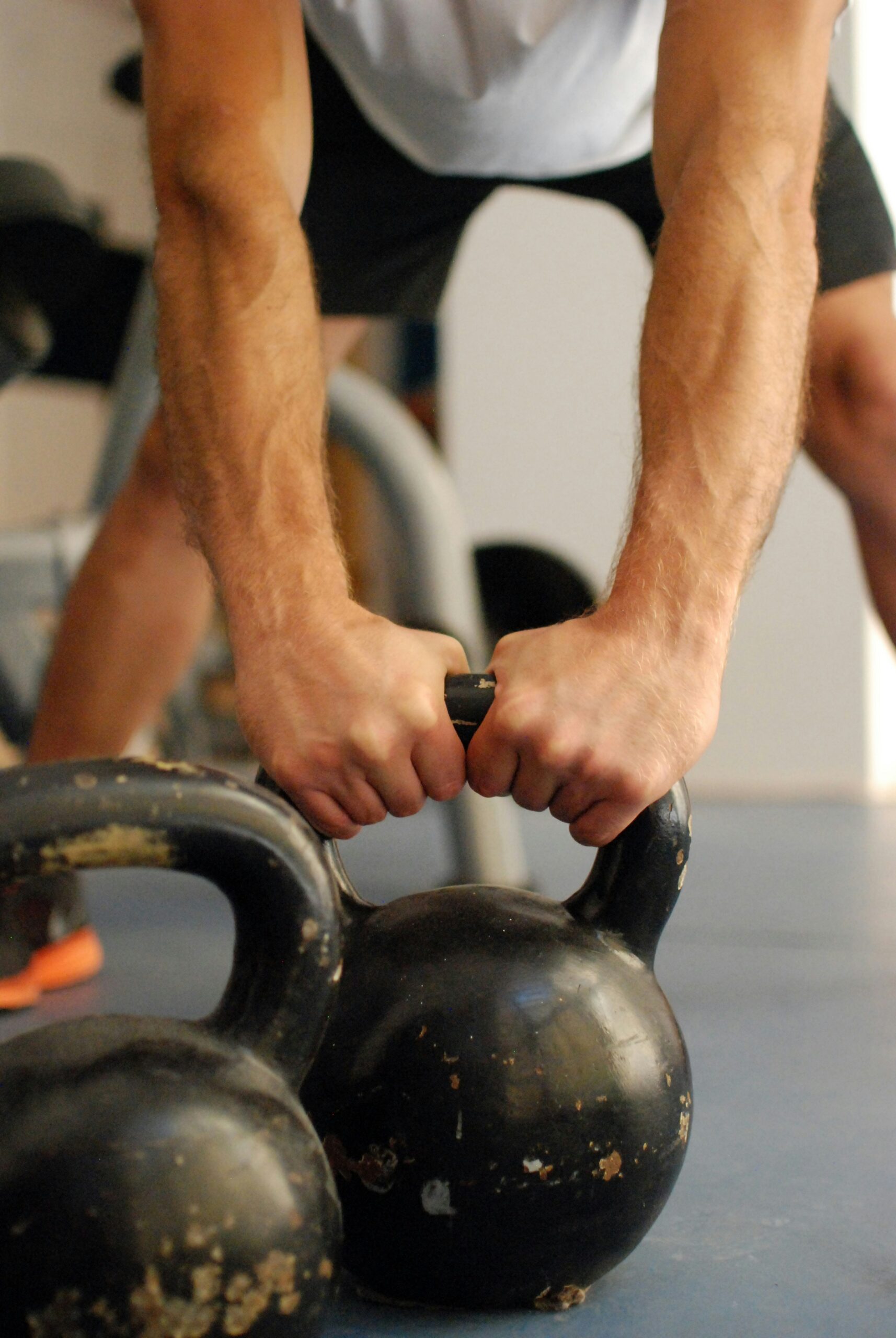

For years, we have been taught to associate training mainly with appearance. With body weight, visible abs, numbers on a scale, calories burned or the way our bodies look in the mirror. It is not surprising; a large part of fitness culture was built around exactly this idea. Yet as time passes, it becomes increasingly clear that the real value of exercise extends far beyond appearance. A body that functions well is not simply a body that looks fit. It is a body that can move, lift, walk, balance, climb stairs, carry things, follow a demanding trail and handle all those small physical tasks that make up real life. This is where the idea behind functional training becomes much more meaningful: instead of building a body that simply looks strong, we train a body that can actually use its strength.
That changes the way we think about fitness. Training stops being an isolated hour separated from the rest of the day and begins to have a purpose within it. You are not training only for what happens inside four walls, but for how you feel once you step outside them. To move more comfortably through the city, play with your children without thinking twice, join an activity you once considered too demanding or simply reach the end of a busy day without feeling as though your body has run out of energy. That may be a far more interesting relationship with exercise than constantly chasing a number or an image.
Somewhere along the way, exercise became more about appearance than movement
Spend a few minutes looking at fitness content on social media and it becomes easy to understand how exercise gradually turned into something we watch rather than something we experience. Training programmes, transformations, physiques, measurements and endless advice can create the impression that there is a particular way you need to look before you can consider yourself fit. As a result, many people begin exercising with a goal that may be months away and fail to notice everything that starts changing much earlier. They do not notice that climbing the stairs has become easier, that everyday movement feels more natural, that they can walk further or that they feel more confident trying something new. They wait for the mirror to change before acknowledging progress, even though their bodies have already begun changing the way they live.
Functional training is interesting precisely because it shifts attention from appearance to ability. Strength becomes meaningful when you can use it, mobility when it allows you to move freely and balance when your body can adapt to different situations. This does not mean appearance cannot remain a goal for someone who wants it. It simply means it does not have to be the only reason we exercise. There is something far more meaningful about feeling that your body works with you rather than constantly placing limitations on what you can do.
What does being functionally strong really mean?
Everyday life does not happen on a gym machine. It happens when we lift a suitcase from the floor, carry shopping bags, bend, turn, climb, descend, walk across uneven ground or suddenly need to regain our balance. The body works as one connected system, and this is exactly what the philosophy of functional training is designed to support. Movements are not treated simply as isolated exercises, but as a way to develop strength, control, stability and mobility that can carry over into life outside training.
What matters is that this philosophy is not only relevant to people chasing athletic performance. In many ways, it can be even more valuable for someone who simply wants to feel better in everyday life. You do not need to lift impressive weights or complete exhausting workouts to become functionally stronger. For one person, progress might mean completing a long hike without feeling completely drained; for another, moving with greater comfort; and for someone else, finally having the confidence to try climbing, kayaking or an activity they previously dismissed as “not for me.” Training becomes genuinely interesting when it starts opening possibilities rather than creating another set of obligations.
Why your breathing affects your wellbeing more than you think | InAction
The body was not designed for one hour of exercise and ten hours of sitting still
There is a contradiction in modern life that is difficult to ignore. We may dedicate time to exercise, yet spend most of the remaining day almost completely still. We sit in front of computers, travel by car, take lifts, spend hours looking at screens and then expect one hour of training to somehow balance all that inactivity. Structured exercise clearly has an important role, but a genuinely active lifestyle does not end when the workout does. It continues through the way we choose to move during the day and through the activities we allow ourselves to experience.
This is where fitness begins to meet outdoor lifestyle, wellbeing and everyday life itself. The strength developed during training can show up on a mountain trail. Balance and control can make a first attempt at SUP feel more natural. Better endurance can make us say yes to an active weekend instead of immediately wondering whether we will be able to keep up. These connections matter because they remind us that the body is not trained for the sake of training. Training exists to support everything we want our bodies to do once the workout is over.
Progress starts showing up where you least expect it
There is a point in the journey of exercise that is difficult to capture in a photograph. It is the moment you realise that something which once required real effort has become almost automatic. A hill no longer feels as difficult, a long day of walking does not seem quite as demanding, or an activity you used to watch from a distance suddenly feels possible. This kind of progress is harder to measure, but it may be the most meaningful kind because it moves beyond the training programme and into real life.
Somewhere around that point, motivation begins to change as well. When exercise is connected only to a distant aesthetic goal, it is easy to become frustrated when results do not appear as quickly as expected. But when you begin noticing what your body can do better, the reward starts appearing everywhere: in the way you walk, the energy you have, your willingness to move and your curiosity to try something new. Fitness stops being a project with an expiry date and becomes part of a lifestyle that continually creates more options.
Why yoga is much more than stretching | InAction
The best training is the one that finds a place in your real life
There is no single form of exercise that works for everyone, and that may be one of the most useful truths about fitness. One person may love functional training, another running, group workouts, strength training, personal training or a combination of different activities. The point is not to discover the “perfect” programme that everyone is supposedly meant to follow, but to find a way of moving that can genuinely fit into our lives. If every workout feels like punishment, consistency will always be difficult. But when there is enjoyment, community, progress and a reason that goes beyond appearance, exercise can become something we look forward to rather than something we constantly struggle to squeeze into our schedule.
This is also where communities can make a real difference. For many people, fitness becomes a lasting part of their lives not when they discover the perfect exercise, but when they find the people they want to do it with. A group workout, a trainer who genuinely understands their needs or a group of people formed around a shared activity can completely change their relationship with movement. Consistency is no longer built on discipline alone. It is also supported by the simple fact that the experience itself is enjoyable.
From training to real life
At InAction, we see fitness as part of a broader active lifestyle rather than an isolated hour in the day. Functional training, personal training, group workouts and different forms of exercise can become the starting point for something much bigger: more movement, greater confidence and a stronger desire to participate in experiences that take us beyond our usual routines. That is why the idea behind the platform is not simply to bring activities together in one place, but to make it easier for people to discover what genuinely suits them, from a workout in the city to the next experience that takes them outside it.
We do not all need to have the same goal, and we certainly do not need to begin at the same level. What matters is having a way to take the first step and, after that, a reason to want to continue. For some, that reason will be strength. For others, it will be energy, community, confidence or simply the fact that they feel better when they move. Whatever the reason, that is where the real value of training can be found: not in one hour of the day, but in everything it allows us to do during all the others.
Less Scroll. More Life.
Training can change our bodies, and there is nothing wrong with wanting that. But if we stop there, we may be missing the most interesting part. Strength matters when it gives us greater freedom to live. Endurance matters when it allows us to keep going a little longer. Mobility matters when our bodies can follow wherever we want to go, and fitness matters when a new experience begins to feel more like an invitation than an obstacle.
We do not train only for the hour we spend in the gym. We train for the walk, the journey, the mountain, everyday life, the next activity and all those things we have not yet decided we want to try.
Because ultimately, a strong body is not valuable only for the way it looks.
It is valuable for everything it allows us to experience.
Less Scroll. More Life.
Inaction – Discover fitness and outdoor experiences near you and book activities in seconds.