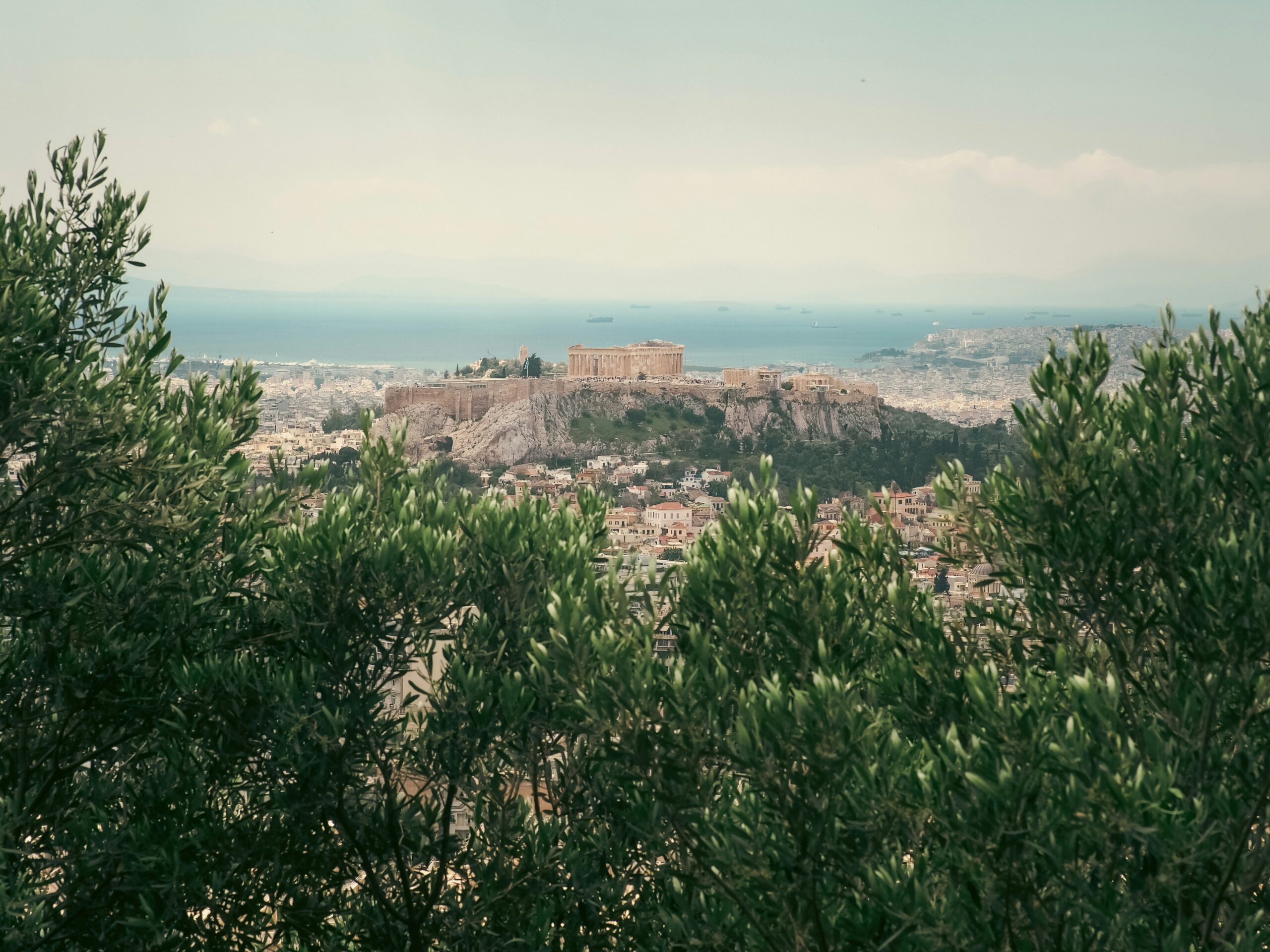

Hiking near Athens: 7 trails to explore nature in Attica
Athens has a way of making you forget just how close nature really is. Between busy streets, crowded neighbourhoods and the constant movement of everyday life, escaping into the mountains can feel like something that requires a long weekend or a carefully planned holiday. Yet some of the most interesting landscapes in Attica are surprisingly close to the Greek capital.
Within the wider Athens region, you can walk through pine forests, explore rocky hillsides overlooking the city, discover mountain scenery and follow paths through coastal landscapes. Mount Hymettus rises directly above the urban area, Mount Parnitha offers a distinctly mountainous environment to the north, and Mount Penteli reveals another side of Attica’s natural character. Even within central Athens, there are hills where a short walk can lead to impressive views.
What makes hiking near Athens particularly appealing is the variety. You can choose a relatively relaxed walk through a historic landscape, spend several hours exploring a forested mountain or travel towards the coast for a different kind of outdoor experience.
You do not need to be an experienced mountaineer to begin discovering these places. However, it is important to understand that each area has its own terrain, access requirements and potential challenges. A walk up Lycabettus Hill is very different from a mountain hike in Parnitha, even though both are within the greater Athens region.
This guide introduces seven areas worth considering for hiking and outdoor exploration in Attica. They range from accessible urban hills to more demanding mountain environments. Rather than presenting seven fully mapped trails with fixed starting points and distances, it explores the character of each location and explains what to consider before choosing a specific route.
Why Attica is a great hiking destination throughout the year
One of Attica’s greatest advantages is its geography. Mountains, forests, rocky hills and coastal landscapes are spread across a relatively compact region, making it possible to experience very different environments without travelling to another part of Greece.
Spring is often a particularly enjoyable season for hiking. Temperatures are generally more comfortable than during the height of summer, and many natural areas become more colourful as vegetation develops. Autumn can also offer pleasant walking conditions, especially after the intense summer heat begins to fade.
Winter brings another perspective. Lower-elevation walks may remain accessible during suitable weather, while the higher parts of Mount Parnitha can experience considerably colder conditions, including fog, snow and ice. The fact that a mountain is close to Athens does not mean its weather will resemble conditions in the city centre.
Summer requires additional planning. Exposed areas around Mount Penteli and Sounion can become extremely hot, with limited shade along some routes. Early starts may help, but hiking during extreme heat is best avoided. Strong winds and elevated wildfire risk can also affect access to forests and mountain areas.
Attica’s natural landscapes have experienced considerable environmental pressure, particularly from major wildfires. Parts of Parnitha and Penteli have been affected by fires that changed the vegetation and, in some places, the condition of the terrain. Visitors should respect protected areas, follow permitted routes and check for current restrictions before setting out.
Another advantage of hiking in Attica is the flexibility it offers. You do not always need to dedicate an entire day to the experience. A short walk up Lycabettus Hill can fit into a morning, while exploring Parnitha may require more preparation and travel time.
This variety makes hiking an appealing option for residents who want to spend more time outdoors and for visitors looking to discover a different side of Athens beyond its famous historical attractions.
Mount Hymettus and Parnitha: two mountains, different experiences
1. Mount Hymettus – Kaisariani Forest
Mount Hymettus is one of the most accessible mountain landscapes around Athens. Rising immediately east of the city, its long ridge provides a distinctive backdrop to the urban area and offers opportunities for walking, hiking and enjoying panoramic views.
The area around Kaisariani is among the best-known starting points for exploring the mountain. The Kaisariani Aesthetic Forest features pine trees, cypress trees, paths and places of historical interest, including the well-known Kaisariani Monastery.
Walking through this part of Hymettus can feel surprisingly peaceful considering how close it is to the city. Forest paths lead through shaded areas, while certain viewpoints reveal wide views across the Athens basin and towards the Saronic Gulf.
The experience can vary considerably depending on the route. Some lower forest paths are suitable for relatively gentle walks, while routes climbing higher onto the mountain can involve steeper gradients and rocky terrain.
For beginners, choosing an established and manageable route around Kaisariani can provide a good introduction to hiking near Athens. Those interested in more demanding routes should carefully check the terrain, elevation gain and current trail conditions.
Hymettus is also an appealing destination for photography and landscape observation. On clear days, the contrast between the forested mountain and the densely built city below is particularly striking.
2. Mount Parnitha – Bafi Refuge Area
Mount Parnitha offers a very different experience. As the highest mountain in Attica, it has a stronger alpine character than the lower hills surrounding Athens, with forested areas, significant changes in elevation and a landscape that feels much farther from the capital.
Bafi Mountain Refuge is one of the best-known reference points for visitors exploring the mountain. The wider area provides access to mountain scenery and hiking opportunities, although the suitability and availability of individual routes must be checked before visiting.
Parnitha is also an important protected natural area. Its ecological significance means that access is regulated in certain zones, and visitors should not assume that every path or forest track is open for recreational use.
Major wildfires have affected parts of the mountain, changing sections of its natural environment. Restoration work, weather conditions and fire-prevention measures can influence which areas are accessible.
For people unfamiliar with mountain hiking, an organised excursion led by an experienced guide can be a useful introduction. It provides an opportunity to explore the landscape with someone who understands the terrain, local conditions and appropriate routes.
What makes Parnitha memorable is the feeling of entering a genuinely mountainous environment. The air, vegetation and changing scenery can seem far removed from the crowded streets of Athens, even though the capital remains within reach.
Mount Penteli and Lycabettus: hiking with views over Athens
3. Mount Penteli – Rocky landscapes and open views
Mount Penteli has a character of its own. Its rocky slopes, exposed terrain and historical connection to the extraction of Pentelic marble create a landscape quite different from the forested areas of Hymettus and Parnitha.
The mountain offers views across the Athens basin from various locations, while its terrain changes considerably between different sections.
However, Penteli has been significantly affected by wildfires in recent years. This makes it especially important to avoid relying on outdated descriptions of hiking routes or assuming that previously accessible paths remain suitable.
Anyone planning to explore the mountain should choose a confirmed, permitted route with reliable access information. Certain sections may involve uneven ground, steep slopes or prolonged exposure to the sun.
Appropriate footwear, sufficient water and a realistic understanding of the route’s difficulty are essential.
Penteli can be particularly interesting for hikers who enjoy rocky mountain scenery and want to explore a less familiar side of Attica. It is best approached with careful planning rather than as an improvised walk into unfamiliar terrain.
4. Lycabettus Hill – A short climb in central Athens
Not every hiking experience needs to take you outside the city.
Lycabettus Hill is one of Athens’ most recognisable landmarks and offers a convenient opportunity to combine walking with panoramic views.
Reaching the summit on foot provides a different experience from simply arriving at the viewpoint. As you climb, the city gradually opens around you, revealing neighbourhoods, landmarks and the surrounding landscape from changing perspectives.
At the top, the views are the main attraction. On clear days, you can see across much of Athens and towards the coastline.
Lycabettus is better described as a short urban hill walk than a traditional mountain hike. Nevertheless, the ascent includes uphill sections and steps that can be tiring, particularly during hot weather.
For visitors with limited time, or residents looking for a convenient outdoor activity, it offers a simple way to include more walking in the day.
It also demonstrates that exploring nature around Athens does not always require specialist equipment or a long journey.
Philopappou, Sounion and Marathon: three different hiking experiences
5. Philopappou Hill – Nature and history in one walk
Philopappou Hill offers one of the most distinctive walking experiences in central Athens.
Its paths pass through areas of greenery, rocky ground and historical landmarks, with views of the Acropolis appearing from different angles.
The atmosphere is quite different from that of the surrounding streets. Although the city remains close, the landscape creates opportunities to slow down and explore at a more relaxed pace.
This is primarily a scenic urban walk rather than a demanding mountain hike. Its appeal lies in the combination of natural surroundings, history and views across Athens.
The area is particularly suitable for people who enjoy walking without needing to complete a long or physically challenging route. Nevertheless, uneven or slippery sections can still require care.
Philopappou is a reminder that spending time outdoors does not always mean travelling into remote countryside. Sometimes a familiar part of the city can offer an entirely different experience when explored on foot.
6. Sounion – Coastal hiking landscapes
Sounion is best known for the Temple of Poseidon and its remarkable views over the Saronic Gulf.
However, the wider area also offers opportunities for exploring the natural landscapes of southern Attica.
The environment here is different from the mountains north and east of Athens. Low Mediterranean vegetation, rocky hillsides and coastal scenery create a landscape shaped by the sea.
The wider Sounion National Park area also includes locations of natural and historical interest, particularly those connected with the mining history of the Lavreotiki region.
If you want to hike in the area, it is important to choose a specific, permitted route and confirm current access conditions. Not every stretch of coastline is suitable for walking, and some rocky sections may be hazardous without local knowledge.
The combination of sea views and Mediterranean landscapes makes Sounion appealing for people who enjoy coastal exploration.
During warmer months, however, limited shade and exposure to the sun make appropriate timing and preparation particularly important.
7. Lake Marathon – A different landscape in Attica
Lake Marathon reveals another side of the region.
Surrounded by hills and vegetation, the reservoir creates a landscape that feels very different from central Athens and the more familiar mountain viewpoints.
The wider Marathon area can be interesting for carefully planned outdoor exploration, but there is an important distinction to make.
The presence of a lake does not mean that a continuous, publicly accessible hiking trail exists around its shoreline. Lake Marathon is a water-supply reservoir, and access to certain areas may be restricted.
Anyone planning a walk should identify a specific, confirmed route in the surrounding region rather than assuming it is possible to follow the water’s edge.
Access arrangements, the condition of tracks and any restrictions should be checked before visiting.
For those who have already explored the more familiar hills around Athens, the wider Marathon landscape can provide a different reason to head outdoors, provided the excursion is planned responsibly.
What to know before hiking in Attica
Hiking near a major city can sometimes create a misleading sense of security.
Because Athens is relatively close, it may be tempting to assume that help, drinking water or a straightforward route back will always be available. That is not necessarily the case, particularly in mountainous or less accessible areas.
The first step is to understand the exact route you intend to follow. Knowing the name of a mountain or seeing a photograph of a viewpoint is not enough.
Look for reliable, up-to-date route information. Confirm the starting and finishing points, total distance, elevation gain and type of terrain. A relatively short route can still be demanding if it involves steep climbs, rocky sections or difficult navigation.
Footwear is another important consideration. Suitable hiking shoes with reliable grip can make a significant difference on uneven ground. Carry enough drinking water, sun protection and a charged mobile phone, along with additional supplies appropriate to the duration and difficulty of the outing.
Weather conditions should never be overlooked. Temperatures on Parnitha can differ considerably from those in central Athens, while exposed locations around Penteli and Sounion may become uncomfortable or unsafe during periods of intense heat or strong winds.
Before visiting forested areas, check the official daily wildfire-risk forecast and any access restrictions announced by the relevant authorities. If an area is closed, do not attempt to enter through another route.
Heavy rainfall, previous wildfires and restoration work can also affect trail conditions.
If you are unfamiliar with the area, tell someone where you plan to go and when you expect to return. Do not rely entirely on mobile coverage or online maps, as connectivity may be unreliable in certain locations.
It is equally important to recognise your own limits.
A well-chosen shorter walk can be far more enjoyable than an ambitious route that leaves you exhausted or uncertain about how to return.
Hiking does not need to involve reaching a summit. The experience of moving through a natural landscape, noticing the surroundings and discovering somewhere new can be rewarding in itself.
How to choose the right hiking experience near Athens
The best hiking route is not necessarily the one with the most dramatic photographs or the highest viewpoint.
It is the one that matches your available time, physical condition, previous experience and expectations.
If you want a short outing without travelling far from central Athens, Lycabettus and Philopappou provide opportunities to enjoy walking and scenic views within the urban area.
For a forest environment, suitable routes around the Kaisariani Aesthetic Forest on Mount Hymettus can offer an appealing introduction.
If you are looking for a more mountainous experience, Parnitha provides a different level of exploration, although it generally requires more preparation and careful route selection.
Penteli may appeal to those interested in rocky landscapes and expansive views, provided they choose an accessible route appropriate to their abilities.
For coastal scenery, the wider Sounion area offers a different environment, while Marathon provides opportunities to explore another part of Attica through carefully selected routes.
If you are new to hiking, joining an organised activity can be a practical way to begin.
An experienced guide can help participants understand the route, navigate unfamiliar terrain and approach the experience with appropriate preparation. Group hikes also provide an opportunity to meet people who enjoy spending time outdoors.
Through InAction, you can explore available outdoor activities and organised experiences, discover information provided by professionals and organisers, and look for options that match your interests and schedule.
Where an organised hiking experience is available, you can review details such as the meeting location, participation requirements and programme before deciding whether it is suitable for you.
Hiking is one of the simplest ways to change how you experience a place.
A trail beginning relatively close to home can lead you into an environment you never realised was there. A familiar mountain can reveal a different perspective when explored on foot, while a short walk through an urban hill can make you notice details you have passed countless times without seeing.
That contrast is part of what makes Attica interesting.
On one side, a capital city that rarely slows down. On the other, mountains, forests, hills and coastal landscapes offering opportunities to spend time outdoors.
The next time you feel like escaping your usual routine, you may not need to plan a trip across Greece.
Your next outdoor experience could be much closer than you think.
Less Scroll. More Life.