
There is something about standing beneath a towering rock face that makes you look up. You might be walking along a mountain trail, stopping to take a photograph or simply admiring the landscape from a distance. At some point, you begin to wonder what it would feel like to be somewhere higher. Not necessarily at the summit, but halfway up, in a place where the view would be completely different and the ground below would seem much further away.
From where you are standing, the rock can look almost impossible to approach. Small ledges disappear into the larger formation, steep surfaces seem to offer nowhere to place your feet, and the natural lines of the cliff draw your eyes towards the sky. If you have never tried climbing, it is easy to assume that this environment belongs exclusively to people with years of experience, specialist equipment and a remarkable level of confidence at height. After all, most of the climbing photographs and videos we come across tend to show the most dramatic moments.
Via ferrata offers a different way to experience this environment. Combining elements of hiking and climbing, it allows participants to move along specially equipped routes on rocky terrain. Some of these routes are suitable for people without previous climbing experience, provided they meet the physical requirements and receive appropriate professional guidance. Others are considerably more demanding and intended for experienced participants. Understanding that difference is essential, because via ferrata is not a single activity with one fixed level of difficulty, and the presence of installed safety equipment does not remove the risks associated with moving through exposed mountain terrain.
In Greece, where mountains, dramatic rock formations and remarkable natural landscapes are often surprisingly close to towns and villages, experiences like these offer another way to explore the country. Meteora is one particularly striking example of a place where rock formations define the entire landscape. Before looking for a via ferrata experience in Greece, however, it is worth understanding what the activity actually involves, how demanding it can be and what you should consider before choosing your first route.
What exactly is via ferrata?
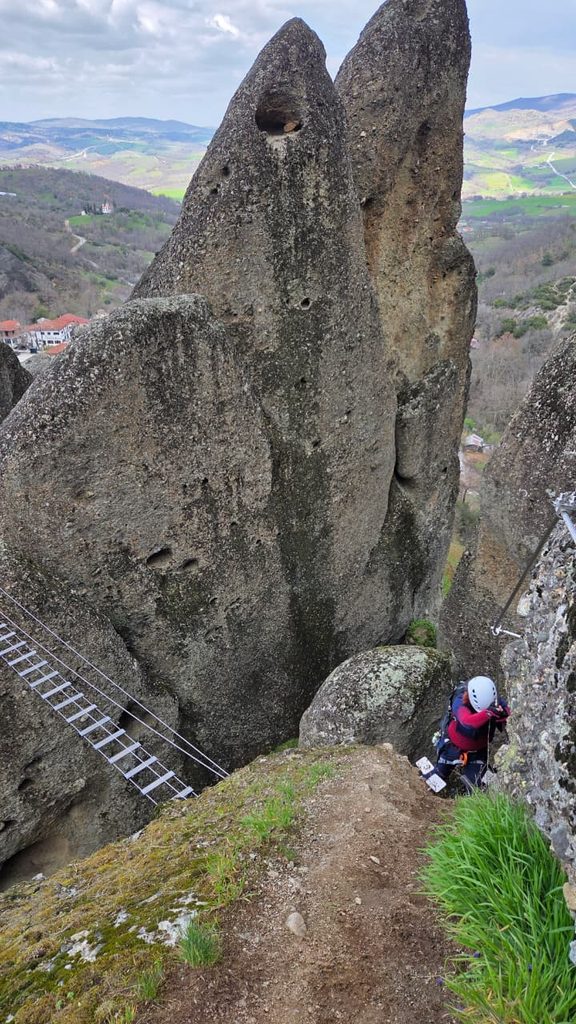
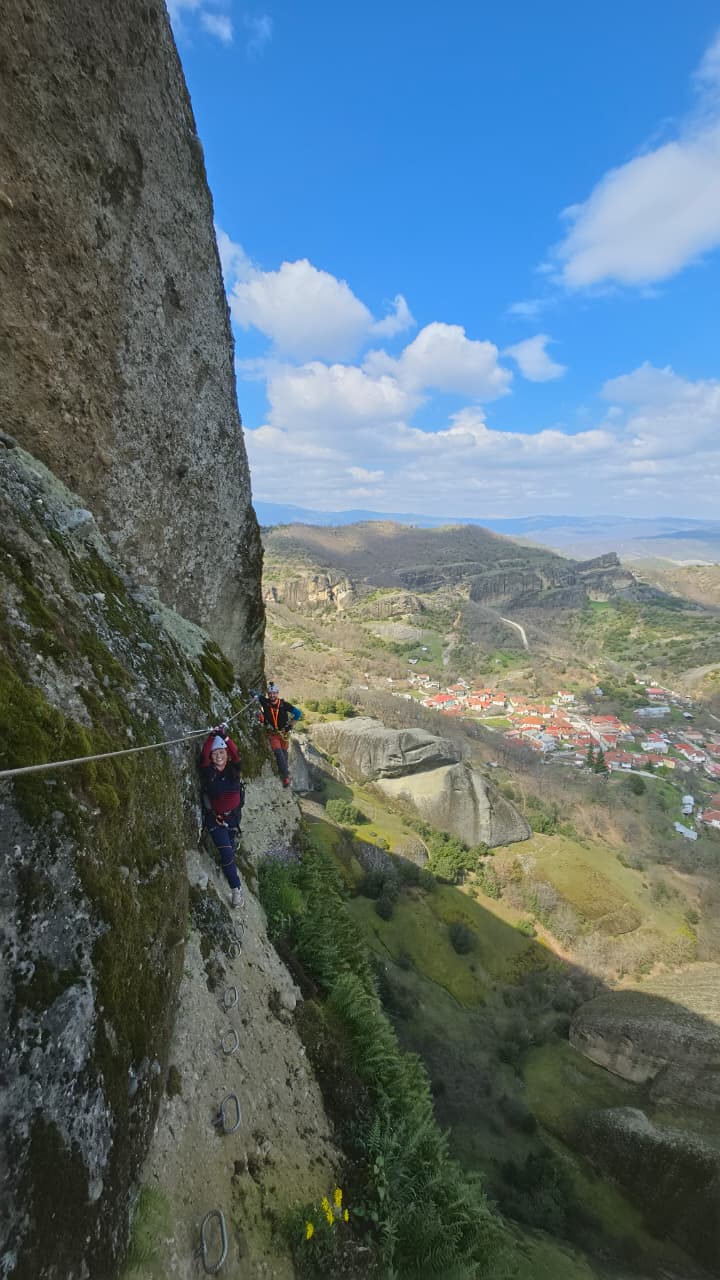
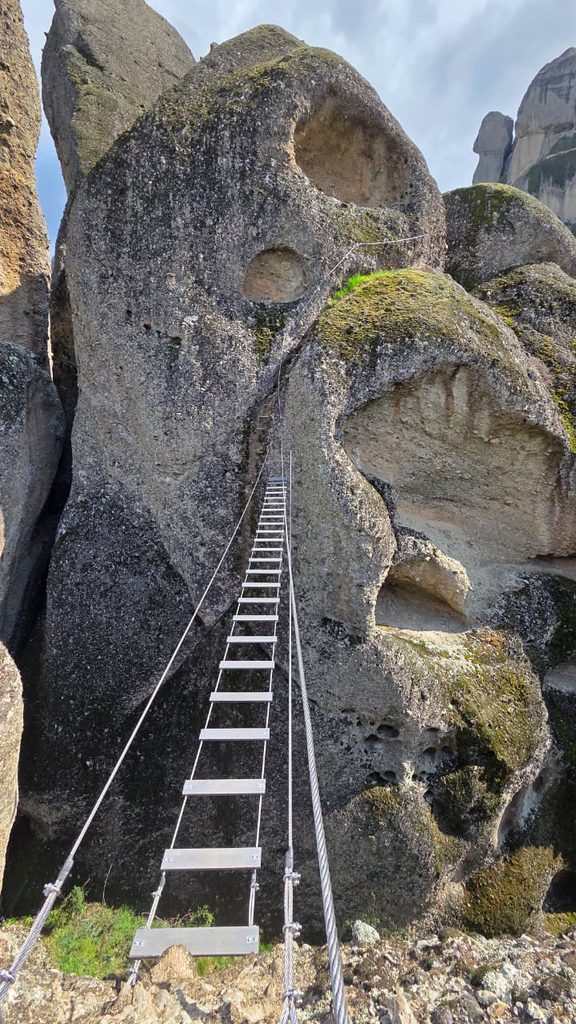
The term via ferrata comes from Italian and translates roughly as “iron path”. It describes a route through rocky or mountainous terrain equipped with fixed protection systems and, where necessary, metal footholds, ladders or other features designed to assist movement. Participants follow the established route while using specialised personal equipment that connects them to the fixed safety system. Depending on the terrain, some sections may feel similar to demanding mountain hiking, while others involve climbing movements that require the active use of both hands and feet.
The main difference between via ferrata and traditional rock climbing lies in how the route is equipped and how protection is managed. In conventional climbing, climbers use different movement techniques, equipment and belaying methods depending on the type of route. On a via ferrata, the route follows installed fixed features, although this does not make it simple or eliminate the need to understand how the equipment should be used. Certain sections can be highly exposed, with considerable height beneath the participant and steep rock surfaces that require concentration and controlled movement.
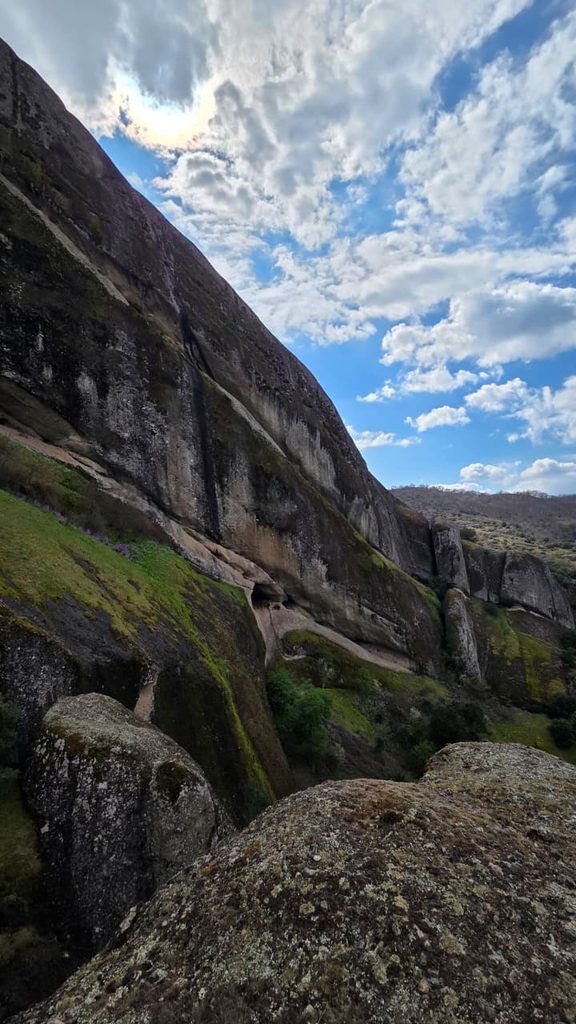
Part of what makes via ferrata interesting is the close relationship it creates with the rock itself. From a viewpoint, a cliff may appear almost smooth, its smaller details disappearing into the overall landscape. Once you move closer, the surface begins to reveal its texture. You notice changes in colour, natural cracks and small variations in the rock that were invisible from below. Your attention shifts towards the terrain immediately around you, while the wider landscape gradually changes as you gain height. Even a relatively short guided experience can offer a completely different perspective on a place you may already know.
Via ferrata routes, however, vary considerably. Some are designed to introduce less experienced participants to moving on rocky terrain, while others demand significant strength, endurance and confidence in exposed environments. That is why searching for via ferrata in Greece should involve more than choosing the route with the most impressive photographs. Understanding the actual requirements of a particular experience is far more useful than relying on the activity name alone.
Δραστηριότητες στην Ελλάδα όλο τον χρόνο: πέρα από τις διακοπές | InAction
Do you need climbing experience?
Previous climbing experience is not essential for every via ferrata route. There are guided experiences designed for beginners, allowing people who have never climbed before to discover the activity under appropriate conditions and professional supervision. This makes via ferrata an interesting option for anyone curious about climbing but unsure where to begin. You do not necessarily need months of experience at an indoor climbing wall or on natural rock to take part in a suitable introductory route.
Choosing the right route is what matters. A via ferrata described as beginner-friendly may still require a reasonable level of fitness, mobility, balance and comfort with heights. Someone who regularly hikes in the mountains may have good endurance but little experience of moving across exposed rock. Equally, someone who trains regularly at the gym may discover that maintaining balance and concentration on a cliff feels quite different from the physical activities they are used to.
Our relationship with height can also be difficult to predict. You might feel perfectly comfortable looking down from a mountain viewpoint but experience a very different sensation when standing on a narrow foothold with open space beneath you. Another person might expect to feel nervous and then find that, with appropriate guidance, they are more comfortable than they imagined. Neither reaction says much about someone’s general fitness or ability. It simply reflects how differently people experience unfamiliar environments.
Before booking, it is important to be open with the organiser about your physical condition, previous experience and anything that could affect your participation. A responsible professional should be able to explain the demands of the route and help you understand whether it is appropriate for your abilities. Your first via ferrata experience does not need to involve the highest cliff or the most challenging section. Starting with a suitable guided route gives you the opportunity to discover how you feel on the rock and whether this is an activity you would like to explore further.
You do not have to be an athlete to enjoy outdoor activities, but you do need to take their requirements seriously. Being curious about a new experience is a good reason to explore it. Choosing an appropriate level is what allows that curiosity to become a positive introduction rather than an unnecessarily difficult challenge.
Canyoning in Greece: a beginner’s guide | InAction
How difficult is via ferrata really?
The difficulty of a via ferrata depends on several factors that are not always obvious in photographs. The steepness of the rock, the length of the route, the duration of demanding sections, the amount of exposure, the need for upper-body strength and the overall physical effort all influence the experience. The approach to the starting point and the return journey also matter, as some guided activities involve a considerable amount of hiking before and after the equipped sections. Different grading systems are used internationally, so descriptions such as “easy” or “moderate” should always be accompanied by more specific information about the route.
A short video might show someone crossing a particularly dramatic section, but it rarely communicates everything that comes before and afterwards. A guided experience may involve walking uphill to reach the rock, spending a significant amount of time moving through exposed terrain and then following another trail back to the starting area. The total physical effort can be greater than expected, especially for someone who has focused mainly on the climbing element when looking at the activity.
There is also the fatigue that comes from sustained concentration. On rocky terrain, your attention remains focused on your footing, body position and the instructions you need to follow. When a route is exposed, the psychological effort can become just as noticeable as the physical work. Two or three hours on a via ferrata may feel very different from spending the same amount of time on an ordinary hiking trail, even if the total distance covered is relatively short.
This is why it is worth asking detailed questions before choosing an experience. How long does the entire activity take? Are there particularly exposed sections? How demanding is the approach? What level of fitness is expected? Are there age, height, weight or other participation restrictions? The answers can help you form a much clearer picture of what the day will involve.
The best first via ferrata is not necessarily the one offering the most spectacular view. It is the one that allows you to experience the activity at a level that genuinely suits you. There will always be other routes to explore if you decide you want to continue.
What equipment do you need for via ferrata?
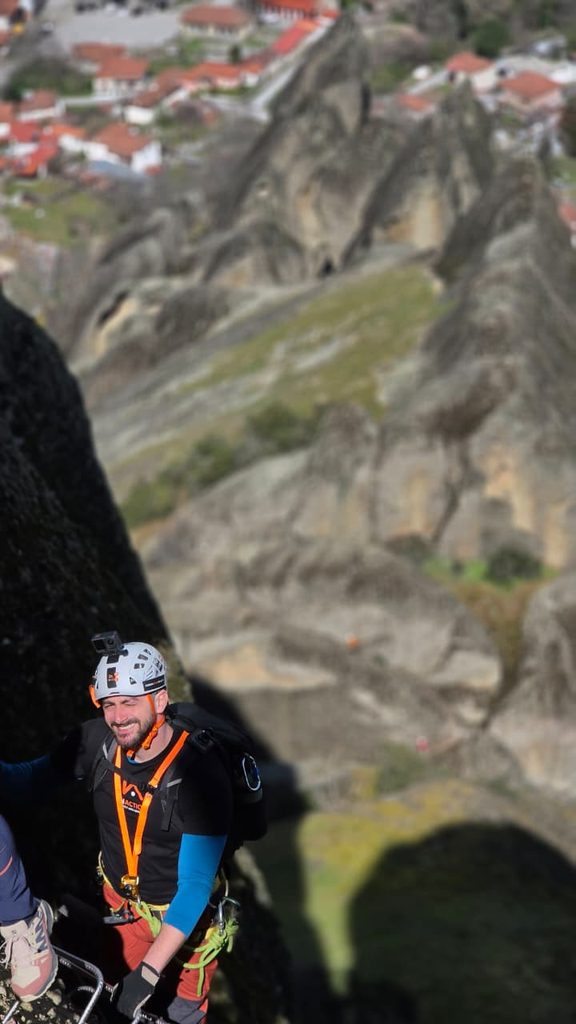
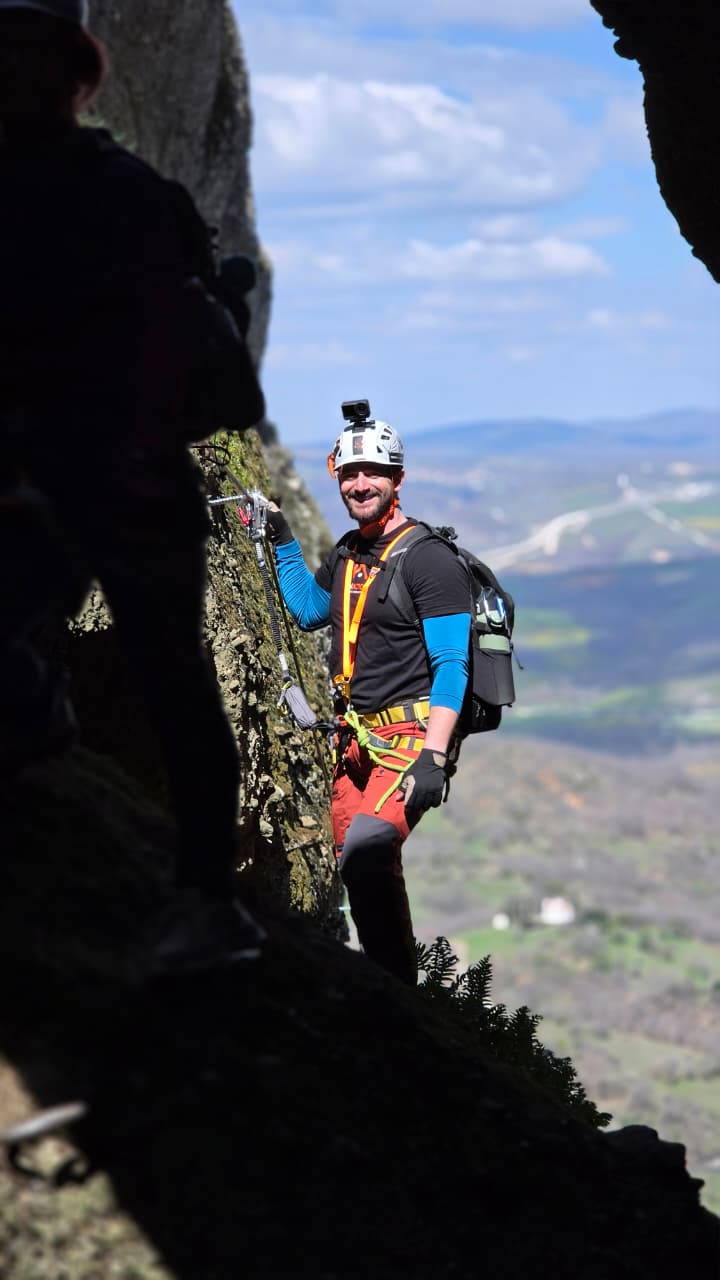
Appropriate equipment is an essential part of via ferrata because the activity takes place in environments where a fall can have serious consequences. Personal protective equipment generally includes a suitable helmet, a climbing harness and a dedicated via ferrata set with an energy absorber and compatible connectors. This equipment is designed specifically for the activity and must be appropriate for the participant, properly maintained and used according to the relevant instructions. Ordinary slings or standard carabiners are not equivalent substitutes for a certified via ferrata system.
Beyond the technical equipment, footwear and clothing are also important. Moving across uneven rock requires suitable shoes, while weather conditions can affect both comfort and safety. Depending on the route, season and duration, participants may also need water, sun protection or additional clothing. These requirements should be clearly communicated by the organiser so that everyone knows what is included and what they need to bring.
For someone trying via ferrata for the first time, buying specialised equipment beforehand is usually unnecessary. On guided experiences where appropriate technical equipment is supplied and checked by qualified professionals, participants can discover the activity without making an immediate investment in their own gear. What matters is confirming exactly what the booking includes, who is responsible for checking the equipment and how participants are instructed before the activity begins.
Equipment alone, of course, is only one part of the picture. Knowing that it is suitable, correctly fitted and used properly is just as important as having it available. A professionally organised experience should take these details seriously rather than treating them as a brief formality before setting off.
Via ferrata safety: what you should know
The presence of fixed protection systems does not eliminate the risks involved in via ferrata. Routes often pass through exposed mountain environments where incorrect equipment use, falls, fatigue or sudden changes in conditions can have serious consequences. The condition of the installed protection systems, the suitability of personal equipment, the competence of the professional leading the activity and the assessment of the route are all important parts of responsible organisation. For beginners in particular, choosing a suitable guided experience with an appropriately trained professional is a significant consideration.
Weather deserves special attention. Rain can make rocky surfaces more slippery, while thunderstorms create serious hazards on exposed routes with metal installations. Conditions in the mountains may also differ from those at the meeting point, even when the weather initially appears favourable. Decisions about whether an activity should proceed need to be based on an assessment of the actual conditions by people familiar with the route. A postponement or cancellation may be disappointing, particularly if you have travelled specifically for the experience, but it can be an important part of responsible risk management.
Before participating, it is worth knowing who organises the activity, what qualifications and experience the guides have, what equipment is used and which requirements apply to participants. The briefing before departure and the instructions given throughout the route are essential. Via ferrata is not something that can be learned safely simply by watching a few online videos. Becoming familiar with the equipment and understanding how to move through this environment requires appropriate practical instruction and supervision.
It is also important to recognise that a guided experience cannot guarantee the absence of risk. Outdoor activities take place in environments that are not entirely predictable, and participants have a responsibility to communicate honestly, follow instructions and respect the limits of their abilities. Good preparation and professional organisation help manage the risks, allowing people to focus on the experience without underestimating the environment around them.
Via ferrata in Meteora: a different experience in Greece
Meteora is one of those places that tends to stay with you long after your first visit. Approaching from Kalambaka or Kastraki, the enormous rock formations rise above the houses and roads in a way that almost catches you by surprise. Their surfaces change colour throughout the day, monasteries appear perched high above the surrounding landscape, and every bend in the road reveals a slightly different view. Most visitors discover Meteora through its monasteries, panoramic viewpoints and the roads winding between the rocks. Yet the area also has a strong connection with hiking, climbing and outdoor exploration.
Meteora has a long history as a climbing destination, while guided activities around its rock formations offer different ways to experience the natural environment. For someone interested in via ferrata in Meteora, it is important to examine the specific route being offered rather than assuming that every activity involving ropes, cliffs or protected passages is a via ferrata. Rock climbing, protected mountain routes and via ferrata are not necessarily the same activity, even when photographs of them look similar. Confirming the nature of the experience, its requirements and the route involved is an important part of planning a visit.
Moving closer to Meteora’s rock formations changes the way you see the landscape. From a viewpoint, you can appreciate the extraordinary scale of the area, but the smaller details become visible only when you approach the rock itself. Surfaces that seemed smooth from a distance reveal irregular textures, subtle colour variations and the marks left by weather and time. The sense of scale becomes more immediate, and the surrounding landscape takes on a different character. Even a short pause during a guided outdoor experience can offer a perspective that is difficult to appreciate from the road.
There is something memorable about discovering a familiar destination in this way. You may have visited Meteora before, photographed the monasteries and watched the light change over the valley, yet find that spending time closer to the rock gives you an entirely different impression of the place. The experience is shaped by small details as much as by the dramatic scenery: the feel of the terrain beneath your feet, the effort of moving through an unfamiliar environment and the moments when you stop to take in your surroundings.
Meteora’s exceptional natural, cultural and religious significance also means that outdoor activities must respect local rules, permitted routes and the surrounding environment. Not every rock formation is suitable or available for climbing or related activities. Choosing a responsible professional and confirming the exact route before participating are particularly important when visiting the area for the first time.
If you are considering trying via ferrata in Greece, taking a little time to choose the right experience is worthwhile. Read the participation requirements, ask questions about anything you are unsure of and make sure the activity matches what you are looking for. It might become your introduction to moving on rocky terrain or encourage you to explore more mountain activities in the future. Equally, it might simply be a memorable day in a place you have always wanted to visit. An experience does not have to turn into a lifelong hobby to be worth having.
Through InAction, you can discover organised outdoor activities in Greece offered by professionals and hosts, explore the details of available experiences and look for something that suits your interests and abilities. Whether you are curious about your first experience on the rock or searching for another way to spend time outdoors, making the right choice begins with understanding what the activity actually involves.
The next time you stand beneath a towering rock face, you might find yourself looking at it a little longer. It will probably seem just as impressive as before, but you will know that there are different ways to experience this environment, provided you choose the right route and the right people to guide you.
Less Scroll. More Life.