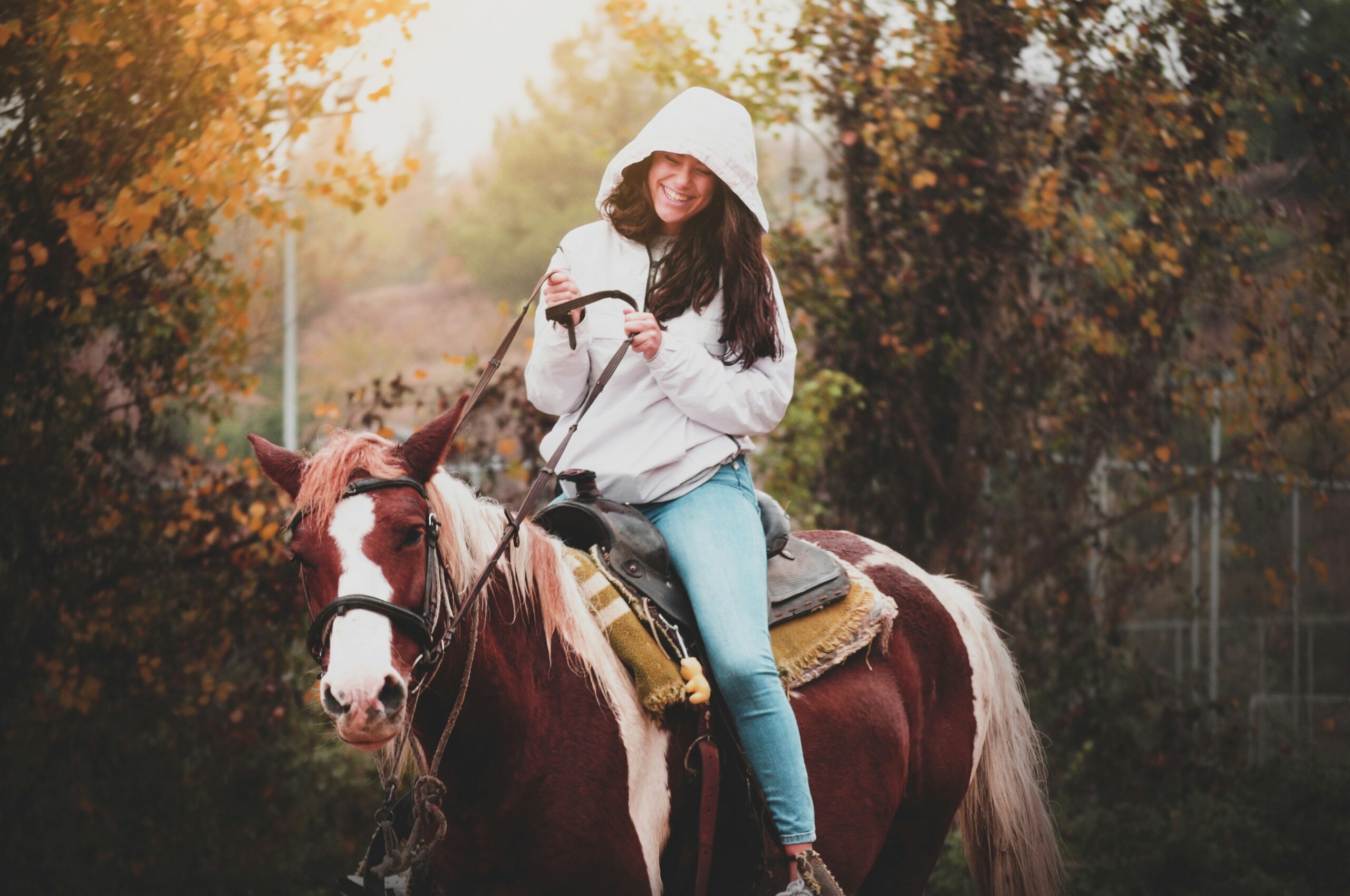

The first time you stand beside a horse, you begin to understand why riding one is so different from almost any other outdoor activity. Up close, the animal is larger than you might have imagined. You notice the sound of its breathing, the way its ears turn towards a distant noise and the subtle movements of its body, even when it appears to be standing still. Before you have put a foot in the stirrup, you are already learning something important: horse riding is not simply about getting into the saddle and enjoying the scenery.
For someone who has never ridden before, the prospect can be exciting and slightly intimidating. Will you be able to keep your balance? How much control are you expected to have? What happens if the horse moves unexpectedly, or if you become nervous halfway through? These are perfectly reasonable questions, and a good riding instructor should be prepared to answer them long before your first ride begins.
Across Greece, horse riding experiences range from introductory lessons at established equestrian centres to guided outings through countryside, woodland and coastal landscapes. Some are designed specifically for people with no previous experience, while others require a degree of confidence in the saddle. Knowing the difference matters, particularly when you are choosing an activity during a holiday and have little familiarity with the horses, the terrain or the people organising the ride.
What is horse riding and why should you try it?
At its heart, horse riding is about learning to move and communicate with an animal that has its own instincts, reactions and way of understanding the world. A rider uses their posture, balance and carefully taught aids to communicate with the horse, while also learning to recognise and respond to its movement. These skills take time to develop. Even experienced riders continue refining their technique, which is one reason equestrian sports offer so much scope for learning.
Your first experience, however, is unlikely to involve anything particularly complicated. A beginner lesson might introduce you to the correct position in the saddle, the basic principles of balance and the way a horse responds to simple instructions. On a guided introductory ride, the emphasis may be less on developing riding technique and more on becoming comfortable around the animal while following a route under professional supervision.
What makes the experience appealing is the relationship between the rider, the horse and the surrounding environment. A woodland track that might feel familiar on foot becomes something quite different when you are travelling at a horse’s walking pace. You become more aware of the ground beneath you, the movement of the animal and the sounds around the trail. There is something engaging about having to pay attention rather than simply being carried from one viewpoint to another.
That said, a guided ride should not be confused with learning to ride independently. Spending an hour in the saddle can introduce you to the experience, but it does not provide the skills needed to manage a horse confidently in unfamiliar situations. If you find yourself wanting to understand more about riding, regular lessons with a qualified instructor are the natural next step. If you are simply curious about the experience, a well-organised introductory outing can still be a worthwhile way to begin.
What is your first horse riding experience like?
A professionally organised first ride should begin with a conversation, not an immediate invitation to climb into the saddle. When you arrive, the instructor or guide should explain how the session will work, ask about your previous experience and make sure you understand the basic rules for being around horses. This is also the moment to mention any concerns you have. There is no benefit in pretending to be more confident than you feel, particularly when the people supervising the activity need to select a suitable horse and decide how much assistance you may require.
Before mounting, you may be introduced to the horse you will ride. The instructor should show you how to approach it safely, where to stand and how to behave around it. Horses are sensitive to movement and sound, and their reactions are not always obvious to someone unfamiliar with them. A sudden noise, an unexpected movement or another animal nearby can attract their attention or cause them to startle. For that reason, you should never approach an unfamiliar horse without permission or walk directly behind it.
Once the horse is ready, the instructor will explain how to mount, often using a mounting block to make the process easier and more comfortable for both horse and rider. They should check your position, adjust the stirrups where appropriate and explain how to hold the reins if you will be using them. The first sensation of sitting in the saddle can be surprising. You are higher above the ground than you are accustomed to, and even a stationary horse makes small movements that you can feel through your seat.
The first few steps are usually taken at a walk, giving you time to become familiar with the rhythm. During an introductory lesson, this may happen in an enclosed arena where the instructor can concentrate on your position and balance. On a guided outing, you might begin in a controlled area before joining a suitable trail. Some operators provide additional assistance by having a member of staff lead the horse from the ground, particularly for young riders or people who need closer supervision.
As the ride progresses, you may find that the movement begins to feel more natural. Rather than trying to anticipate every step, you learn to sit in a balanced position and follow the instructor’s guidance. There is no expectation that you should immediately feel comfortable with everything. If you become nervous, lose confidence or feel physically uncomfortable, tell the guide. A responsible operator should take your concerns seriously and adjust or stop the activity when necessary.
What to wear and how to prepare for your first ride
You do not need an entire wardrobe of equestrian clothing to try horse riding for the first time, but what you wear matters more than it might for an ordinary walk in the countryside. Clothing needs to allow comfortable movement without creating unnecessary friction or becoming caught in the equipment. A pair of well-fitting, full-length trousers is generally a better choice than shorts, particularly because your legs will be in contact with the saddle throughout the ride.
Footwear deserves special attention. Riding boots are designed with features that help the foot sit appropriately in the stirrup and reduce the risk of it becoming trapped. If you do not own riding boots, ask the organiser what alternatives are acceptable rather than assuming that any pair of trainers will do. Open-toed shoes, sandals and footwear with unsuitable soles are not appropriate for riding. The operator should be able to explain the requirements for the type of stirrups and equipment being used.
A properly fitted equestrian helmet is an essential piece of protective equipment. It should meet recognised safety standards for horse riding and be appropriate for your head size. A bicycle helmet or a helmet intended for another sport should not automatically be treated as a substitute. Before booking, confirm whether the riding centre provides suitable helmets, particularly if you are travelling and do not have your own equipment.
The weather and location will also influence what you need. A countryside ride on a cool morning may feel quite different from an afternoon session in the summer heat, while mountain areas can experience noticeable temperature changes. Comfortable layers, suitable sun protection and access to drinking water are worth considering. Avoid loose scarves, dangling accessories or anything that could catch on the saddle or other equipment. It is also sensible to ask where you can leave your phone, bag and personal belongings during the activity.
Arriving a little early can make the whole experience more enjoyable. You will have time to meet the instructor, get comfortable with the surroundings and ask questions without feeling rushed. If you have never been close to a horse before, even a few minutes spent observing how the staff handle the animals can help you understand what to expect. Good preparation is not about eliminating every unfamiliar sensation; it is about giving yourself enough information to approach the experience calmly and attentively.
Is horse riding safe for beginners?
Horse riding can be organised to accommodate people with little or no experience, but it is important to recognise that it carries inherent risks. Horses are large, powerful animals, and even one that is accustomed to beginners can react unexpectedly. A sudden sound, an unfamiliar object or movement in the surrounding environment may cause a horse to startle. Riders can also lose their balance or fall, which is why appropriate supervision and protective equipment are so important.
The experience and judgement of the instructor or guide make a significant difference. A responsible professional should assess each participant’s ability, select an appropriate horse and explain the relevant safety procedures before the ride begins. The route itself also matters. Uneven ground, steep slopes, changing weather and the presence of other animals or vehicles can introduce challenges that are less likely to arise in a controlled riding arena.
Matching the horse to the rider is another essential consideration. Not every horse is suitable for every person, and factors such as the animal’s size, physical condition, training and temperament all need to be considered. Riding centres may have weight limits, age restrictions or other participation requirements. These should be communicated clearly before booking, rather than leaving visitors to discover them after arriving.
Animal welfare is equally important. A horse should not be treated as a piece of recreational equipment that can be used continuously without regard for its needs. Responsible operators provide appropriate care, rest, water, suitable tack and working conditions that take the animal’s wellbeing into account. As a visitor, you may notice whether horses appear well cared for, whether their equipment fits appropriately and whether staff handle them calmly and respectfully. These observations cannot replace a professional welfare assessment, but they can help you ask more informed questions about how the business operates.
If you have a medical condition, previous injury, balance difficulty or another concern that could affect your ability to ride, discuss it with the organiser before booking and seek medical advice where appropriate. The same applies when arranging an experience for children, as age requirements, supervision and the format of introductory sessions vary between providers.
No riding centre can promise that an unexpected incident will never occur. What a responsible operator can offer is careful preparation, suitable horses, qualified supervision and a willingness to adapt or stop the activity when circumstances require it. Those considerations should carry more weight in your decision than an impressive photograph or an unusually low price.
Horse riding lessons or a guided trail ride?
For someone interested in trying horse riding, the choice often comes down to two different experiences: taking an introductory lesson or joining a guided ride in the countryside. Both involve spending time with horses, but they serve different purposes, and understanding that distinction will help you choose an activity that meets your expectations.
An introductory lesson is primarily about learning. It usually takes place in a controlled environment where an instructor can concentrate on your posture, balance and basic communication with the horse. You may spend much of the session practising simple movements and becoming familiar with the animal’s responses. The setting may be less visually dramatic than a mountain trail or a beach, but it provides an opportunity to build confidence without the additional demands of unfamiliar terrain.
A guided trail ride is generally more focused on the experience of travelling through a particular landscape. Depending on the operator and the route, you might follow quiet country tracks, woodland paths or other suitable trails with a professional guide. The pace and level of independence should reflect the participants’ abilities. Some introductory rides are conducted entirely at a walk, while others are designed for people who already have enough experience to handle more demanding conditions.
It is worth remembering that an outdoor route is not automatically suitable for beginners simply because it is advertised as a leisure activity. Changes in terrain, slopes, passing vehicles or unexpected distractions can make a trail more complicated than an enclosed arena. A reputable operator should explain the requirements clearly and, where necessary, recommend an introductory lesson before allowing someone to join a particular route.
If your interest is in developing riding skills and spending more time around horses, lessons are likely to offer the strongest foundation. If you are travelling and want to experience the countryside in a different way, a properly supervised beginner-friendly ride may be more appropriate. Neither option is inherently better. The important thing is that the activity delivers what it promises, respects the abilities of the participants and places the wellbeing of the horses at the centre of the experience.
How to choose the right horse riding experience for you
Before booking your first ride, consider what you actually want from the experience. Are you interested in learning a new skill, spending time with horses or exploring a particular landscape? A riding lesson and a guided countryside outing may look similar in photographs, but the experience on the day can be quite different. Being clear about your expectations will help you avoid choosing an activity that is either too demanding or too limited for what you had in mind.
Look for providers that explain their programmes in practical detail. You should be able to find out whether beginners are welcome, how long the session lasts, what equipment is included and whether any age, weight or other participation restrictions apply. If the activity involves a trail, ask about the general terrain and the level of supervision. It is also useful to know how many riders usually join each group and whether the programme can be adjusted if someone feels uncomfortable.
The way a provider answers questions can tell you a great deal. A professional organiser should be comfortable discussing how horses are selected for different riders, what safety measures are in place and how the animals are cared for. Clear explanations are particularly valuable when you are booking an experience in an unfamiliar destination and cannot visit the facilities beforehand.
Animal welfare should be part of that decision, not an afterthought. Horses need appropriate feeding, rest, veterinary care, suitable equipment and working conditions that reflect their individual needs. A business that takes these responsibilities seriously is more likely to approach the entire experience with the attention and professionalism it deserves. A scenic route is appealing, but it should never come at the expense of the animals providing the experience.
If you are exploring Greece, a guided horse ride can also be an opportunity to discover places you might otherwise overlook. Rural landscapes, quiet mountain communities and countryside routes offer a different perspective from the country’s better-known tourist attractions. You do not need to travel to a remote location or attempt a challenging trail to appreciate that. Sometimes a gentle, carefully organised ride through a peaceful setting is exactly the right introduction.
Through InAction, you can discover available outdoor activities and organised experiences across Greece, explore information provided by professional operators and find options that fit your interests and travel plans. When a horse riding activity is listed, you can review its participation requirements and availability before deciding whether to book.
Your first ride does not need to be long, adventurous or particularly ambitious. What matters is having the right guidance, feeling comfortable enough to learn and knowing that the horse beneath you is being treated with care and respect. If you enjoy the experience, you may decide to return for a lesson and begin understanding riding in greater depth. If it remains a one-time adventure, it can still leave you with a different appreciation of the countryside and the animals that have shared so much of human history.
Perhaps that is what makes horse riding unlike most other outdoor experiences. You are not simply moving through a landscape under your own power or following a marked trail. You are learning to share that journey with another living creature, paying attention to its movement, respecting its limits and discovering that the experience begins long before the ride itself.
Less Scroll. More Life.