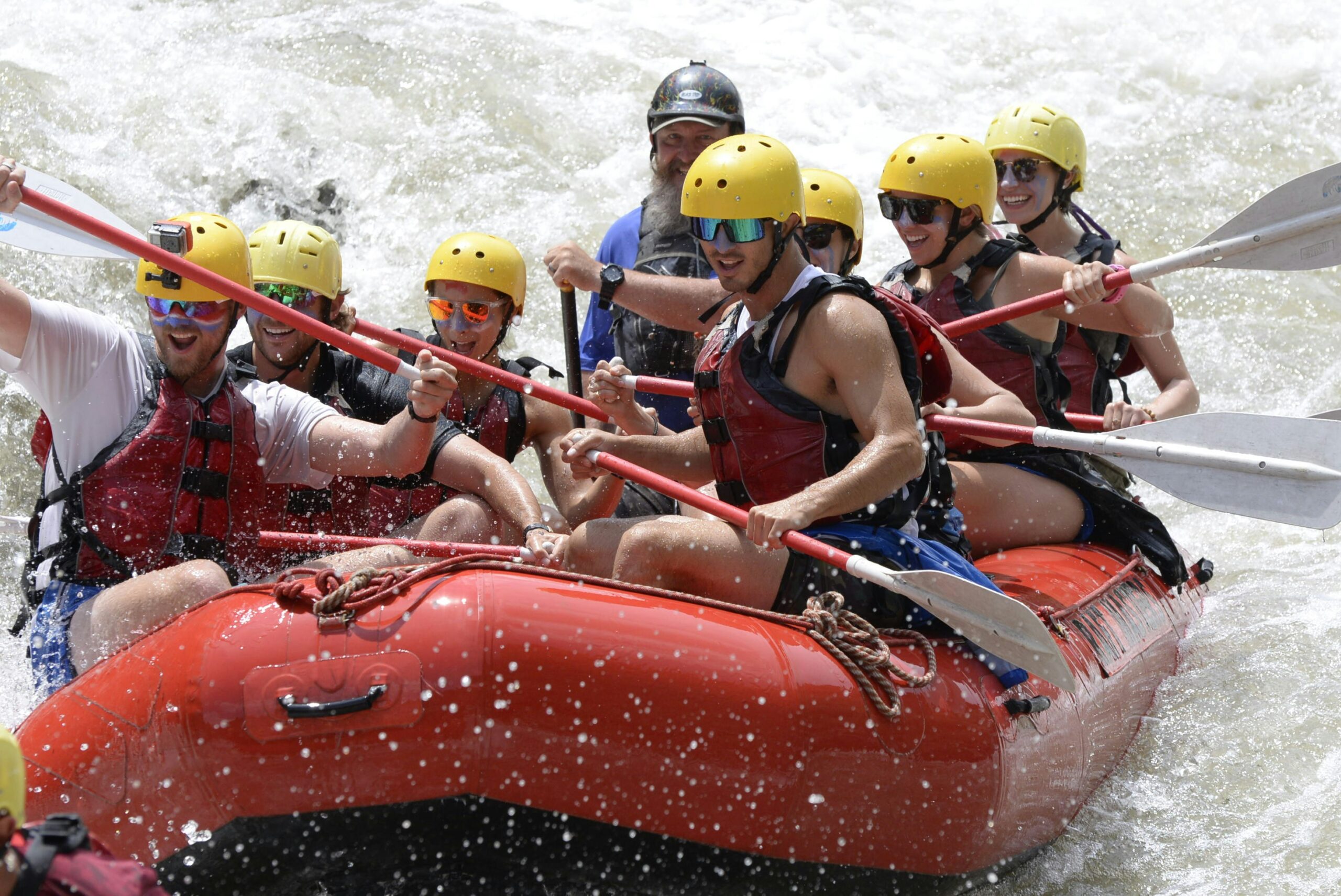

There is a moment at the beginning of a rafting trip when everything becomes a little quieter, even with the sound of the river around you. The guide finishes explaining what to do, everyone settles into the boat, and the first few paddle strokes take you away from the riverbank. You might be surrounded by mountains, forests or the steep walls of a gorge. For the next part of your day, your attention belongs almost entirely to the water ahead.
Rafting is often associated with dramatic rapids, adrenaline and people who seem perfectly comfortable being thrown around in an inflatable boat. That side of the sport certainly exists, but it is only part of the picture. Some guided river trips are designed to introduce beginners to rafting in manageable conditions, with plenty of time to enjoy the scenery between more active sections. Others involve powerful currents, technical manoeuvres and challenges that require considerably more experience. Understanding that difference is the first step towards choosing a trip you will actually enjoy.
Greece is a particularly interesting place to discover rafting because its rivers take you through landscapes that feel remarkably different from the islands and coastlines most visitors associate with the country. In Epirus, the clear waters of the Voidomatis flow through the forests of Zagori, while the Arachthos passes through the rugged mountains of Tzoumerka. Further south, the Lousios–Alfeios river system runs through the dramatic terrain of Arcadia, and the Tavropos offers another way to experience the mountainous countryside of Evrytania.
You do not need to be an experienced adventurer to begin exploring these destinations. You do, however, need to choose the right trip, understand what participation involves and book with an organiser who takes river conditions and safety seriously.
What is rafting and why should you try it?
Rafting involves travelling downstream in a specially designed inflatable boat, usually with a group of participants and a trained river guide. Everyone has a role to play. The guide navigates the river, assesses the conditions and gives instructions, while the people in the boat use their paddles to help steer and maintain control. It sounds straightforward when described on dry land, but the experience becomes much more engaging once the boat starts moving and everyone has to respond together.
One of the things that surprises first-time participants is how quickly a group of strangers begins to work as a team. You might start the morning barely knowing the person sitting beside you, yet within minutes you are paddling in the same rhythm, reacting to the same instructions and laughing when a wave sends cold water over the side. There is no need for complicated conversation. The river gives everyone something immediate to concentrate on, and cooperation becomes a natural part of the experience.
Then there is the landscape. Rafting allows you to travel through stretches of countryside that can be difficult to appreciate from a road or even a hiking trail. Riverbanks rise into cliffs, forests extend towards the water, and the scenery changes as you move downstream. In quieter sections, there may be time to look around and notice details you would otherwise miss. In faster water, your attention shifts back to the boat, the guide and the next bend in the river.
The physical demands depend on the route. Some introductory trips involve relatively gentle paddling and manageable currents, while more challenging sections require greater stamina, coordination and confidence in moving water. Being a beginner does not automatically exclude you from rafting, but neither does it mean every organised descent will be appropriate. A good first experience is one where the demands of the river match your abilities, rather than one where you spend the entire journey worrying about what comes next.
Voidomatis and Arachthos: rafting in Epirus
Epirus has some of the most recognisable river landscapes in Greece, and two of its best-known rafting destinations illustrate just how different those environments can be. The Voidomatis and Arachthos both flow through mountainous surroundings, but they offer distinct scenery and river experiences. Neither should be judged solely by its reputation or by photographs taken on a particularly calm or dramatic day.
The Voidomatis River, in the Zagori region, is famous for its clear, blue-green water. Its setting is part of what makes it so appealing: wooded riverbanks, mountain scenery and traditional stone bridges give the surrounding landscape a character that feels closely connected to Zagori itself. On suitable stretches and under appropriate conditions, guided descents can offer an introduction to rafting for people who have never tried it before. The emphasis on these trips may be as much about enjoying the river environment as navigating its currents.
The water, however, deserves particular attention. Voidomatis is known for being cold, even when the weather above the river is pleasantly warm. That contrast can surprise visitors who arrive expecting something closer to a summer activity on the coast. Suitable clothing and equipment matter, and the organiser should explain what protection is needed for the conditions on the day. Water levels and the chosen section also affect the character of the trip, so a beginner-friendly description should always be understood in relation to a specific descent rather than the river as a whole.
The Arachthos River, in the wider Tzoumerka area, has a different presence. Its course passes through imposing mountain landscapes, with rocky slopes, deep gorges and sections where the scale of the surroundings becomes one of the defining parts of the experience. Depending on the route and water conditions, rafting here can involve more energetic passages and greater demands on the group. Organisers use different sections of the river, and those sections are not interchangeable in terms of difficulty.
For someone visiting Epirus, the choice between Voidomatis and Arachthos should begin with the kind of trip being offered, not a general comparison of which river is better. Ask where the descent starts and finishes, what conditions are expected and whether previous rafting experience is recommended. If you are travelling specifically to try rafting, it is worth keeping some flexibility in your plans. River conditions are not fixed, and the most responsible decision an operator can make may occasionally be to change or postpone a trip.
Both destinations also reward visitors who stay longer than a few hours. Zagori is known for its stone-built villages and mountain scenery, while Tzoumerka offers a landscape of steep mountains, traditional settlements and outdoor exploration. Rafting can be the main reason for visiting, but it does not have to be the only thing you experience.
Lousios and Tavropos: two more rivers for rafting in Greece
You do not have to travel to northwestern Greece to find a memorable river adventure. The mountainous regions of the Peloponnese and Central Greece offer other possibilities, with landscapes that are worth discovering in their own right. Among them, the Lousios and Tavropos stand out as destinations associated with organised rafting activities, although their suitability depends on the particular route and the prevailing conditions.
The Lousios River, in Arcadia, flows through one of the Peloponnese’s most distinctive natural settings. The gorge is known for its steep sides, dense vegetation and historic monasteries built into the surrounding landscape. The area has a strong sense of place, where mountain scenery and centuries of human history sit unusually close together. Even before reaching the river, the journey through the region gives you an idea of why Arcadia attracts people interested in more than a conventional weekend escape.
Rafting activities here commonly involve selected sections of the Lousios–Alfeios river system. The distinction matters because an advertised trip may not take place entirely on the Lousios itself. Certain sections can feature powerful currents and technical challenges, particularly when water levels are higher, so beginners should check the exact itinerary and participation requirements. The fact that a trip is commercially organised does not necessarily make it suitable for everyone.
The surrounding area makes it easy to turn a rafting excursion into a longer stay. Mountain villages, walking routes and the cultural landmarks of Arcadia provide plenty of reasons to explore beyond the river. For travellers coming from Athens or other parts of the Peloponnese, that combination of outdoor activity and regional discovery can be especially appealing.
Further north, the Tavropos River flows through the mountainous landscapes of Evrytania. The region is characterised by forests, steep terrain and an abundance of natural waterways, giving it a very different atmosphere from Greece’s coastal destinations. Organised rafting descents offer an opportunity to experience part of that landscape from the river, with the details of each trip determined by the section selected and the conditions at the time.
Seasonality is particularly important when planning river activities. Rainfall and water flow influence not only whether a trip can operate but also how demanding it may be. A route that offers manageable conditions at one point in the season can feel quite different at another. Rather than assuming that a particular month is always the best time to visit, contact the organiser and ask what is normally possible during your intended travel dates.
What connects these four rivers is not a single style of rafting. It is the opportunity to explore different parts of mainland Greece through an activity shaped by the natural environment. The experience on the day will depend on much more than the destination’s name, and understanding that is essential when deciding where to go.
What is your first rafting experience actually like?
Most first-time rafting trips begin with a meeting point rather than a riverbank. You arrive, meet the organisers and receive an explanation of how the day will unfold. Depending on the location, the programme may include a transfer to the starting point, equipment fitting and some time spent preparing before anyone gets into a boat. It is worth checking the full schedule beforehand, especially if you are planning other activities later that day.
The equipment comes next. A rafting organiser will generally provide a helmet and a suitable personal flotation device, along with additional items such as a wetsuit or specialist footwear when the conditions require them. These are not simply accessories to make the experience more comfortable. Proper fit and appropriate protection are essential, particularly in cold water. If something feels loose, restrictive or uncomfortable, say so before leaving the preparation area.
Once everyone is equipped, the guide explains how the group will operate on the river. You will learn where to sit, how to hold your paddle and what the main commands mean. There should also be a clear explanation of what to do if someone falls into the water, loses their paddle or needs assistance. This briefing is not a formality to get through before the enjoyable part begins; it is part of what makes the activity possible. Even on a relatively gentle section, understanding the instructions and responding promptly can make a significant difference.
The first few minutes on the water are often spent getting used to the movement of the raft. Paddling as a group takes a little coordination, and not everyone will find the rhythm immediately. That is normal. As the trip continues, you become more familiar with the guide’s voice, the feel of the paddle and the way the boat responds when everyone works together. Some stretches may require active paddling, while others allow the raft to move with the current under the guide’s control.
The experience is rarely a continuous sequence of dramatic rapids. Depending on the route, there may be calmer sections between faster passages, giving you time to look at the riverbanks and take in the surroundings. There can also be moments when the boat turns quickly, water splashes over the side or the group needs to respond without hesitation. Those changes in pace are part of the experience, but their intensity varies considerably between rivers and routes.
At the end of the descent, the group leaves the water and follows the organiser’s arrangements for returning equipment and travelling back to the meeting point. The time spent in the raft is only one part of the programme, so check whether the advertised duration includes transfers and preparation. Knowing what to expect makes the day more relaxed and helps you arrive properly prepared.
Is rafting safe and what equipment do you need?
Rafting takes place on moving water, and moving water comes with risks that should never be underestimated. Currents can be stronger than they appear, submerged obstacles may be difficult to see, and cold water can affect the body quickly. Weather and river levels can also change the conditions of a route. Professional guiding, suitable equipment and careful planning help manage these risks, but they do not remove them entirely.
A properly fitted helmet and personal flotation device are basic pieces of protective equipment for rafting. Depending on the location and season, a wetsuit, suitable river footwear and other protective items may also be necessary. The organiser should explain what is included, what participants need to bring and how the equipment should fit. If you are unsure about anything, ask before the activity starts rather than trying to work it out once you are on the water.
River difficulty is another important consideration. Whitewater sections are commonly described using an international classification system that considers the characteristics and technical demands of the water. Lower grades generally indicate less complex conditions, while higher grades involve more demanding obstacles, stronger currents or more difficult manoeuvres. However, a grade is not a promise that a trip will always feel the same. The actual conditions depend on factors such as water level, weather and the specific section being navigated.
That is why a general statement that a river is suitable for beginners is not enough. A responsible organiser should be able to explain which part of the river you will descend, what conditions are expected and what level of experience or physical ability is required. Some activities have minimum age requirements, while others may require participants to be confident swimmers or meet additional criteria. These details should be established before booking, especially when travelling with children or people who have never participated in river sports.
It is equally important to be open about any relevant medical conditions, injuries or concerns that could affect participation. Ask the organiser about their requirements and seek medical advice when appropriate. You should also understand what happens if the river becomes unsuitable on the planned day. A change of route, postponement or cancellation can be inconvenient, but it is preferable to proceeding under conditions that the guiding team considers unsafe.
Good preparation does not make rafting risk-free. It does, however, allow you to make a more informed decision and understand the responsibilities shared between the organiser, guide and participants.
How to choose the right rafting trip for you
The best first rafting trip is not necessarily the one with the biggest rapids or the most dramatic photographs. It is the one that offers an appropriate level of challenge, clear information and a setting you genuinely want to explore. If you are new to the activity, start by looking for guided descents that explicitly welcome beginners, then read the details rather than relying on that label alone.
Find out which river section the activity covers and how the organiser describes its difficulty under normal operating conditions. Ask whether swimming ability is required, whether there are age restrictions and how physically demanding the trip is likely to be. It is also worth checking the overall duration, equipment provision, transfers and cancellation arrangements. A detailed description can tell you far more about the experience than a collection of spectacular images.
Your travel plans may help narrow the choice. If you are exploring Zagori, rafting on the Voidomatis could fit naturally into a trip that includes traditional villages and mountain scenery. In Tzoumerka, the Arachthos offers an opportunity to experience the region’s rugged landscape from the water. A visit to Arcadia might combine a Lousios–Alfeios rafting trip with time in the surrounding villages, while Evrytania provides the setting for discovering the Tavropos alongside other outdoor experiences.
These destinations are worth approaching as places to explore, not simply locations where an activity happens to be available. The journey to the river, the villages you pass through and the landscape surrounding the descent can become just as memorable as the time spent in the boat. Giving yourself enough time to enjoy the region makes the experience feel less like another item on a travel checklist.
Through InAction, you can explore available outdoor activities and organised experiences across Greece, discover information from professional providers and find options that suit your interests and travel plans. When a rafting experience is listed, you can review its details, participation requirements and availability before deciding whether to book.
If this is your first time rafting, there is no reason to rush towards the most demanding route. Choose a trip that suits your abilities, pay attention to the briefing and allow yourself to enjoy the unfamiliar feeling of travelling with the river. You may discover that what stays with you afterwards is not the fastest section or the cold water splashing into the boat, but the quieter moments between them: the forest along the riverbank, the mountains above the gorge and the unexpected pleasure of seeing a familiar country from a completely different perspective.
Less Scroll. More Life.